
Football Betting Predictions 2026: How to Read Form, Markets and the Margin
 Available in US
October 30, 2026 — verified against the Gambling Commission’s public register.

Plenty of pages will sell you a “sure thing” for the weekend’s football. This one is built around the opposite idea: that nobody — not the tipster with the slick app, not the model on a quant desk, not the writer of a guide like this one — knows which way a match will turn, and that a prediction is only as good as the thinking behind it. The pages that follow are about that thinking: how a forecast of any kind is built, what a price actually says once the bookmaker’s margin is taken out, how a stake plan keeps the bank alive through a bad run, and which bookmakers hold a Gambling Commission licence to take bets from customers in Great Britain. No picks, no scorelines, no promised winners — and the same restraint goes for the offers and promotions advertised at the foot of an operator’s homepage, which look very different once their turnover rules, minimum odds and expiry windows are spelled out in full.
This is a guide, not a tip sheet. The clusters of research it draws on sit in roughly the order you might work through them yourself: which licensed bookmakers serve customers in Great Britain, how regulation shapes what they can offer, what a responsible gambling toolkit looks like at a licensed site, how a phone or tablet handles a bet in practice, and the mechanics of a prediction from form to stake plan.
The Landscape of Licensed Bookmakers for Football in Great Britain
Ten brands hold a Gambling Commission remote licence and offer a sportsbook aimed at football bettors in Great Britain. Some are household names that have taken bets on British high streets for decades; others are newer, online-only operators built around the in-play market and the bet builder. The set is not a ranking — a place at the top of a list is a place in a comparison, not a licence, and every brand here meets the same statutory test of being on the Commission’s public register against a remote general betting standard (real events) licence. What differs is the depth of the football product, the markets on offer, the welcome package and the live-betting experience, and those are the points a comparison is honest about.
The table below is the licence picture and the football-relevant terms each operator states on its own pages. Brand names and licence numbers come from the Gambling Commission’s public register; the right-hand column reflects what each operator’s site or app listing actually says about football, in-play, cash out and bet builder. A blank cell is not a verdict — it simply means the source did not state that point in the form the comparison needs.
| Brand | Gambling Commission licence | What the operator states on football |
|---|---|---|
| 10bet | 43173 (Blue Star Planet Limited) | Football, tennis and horse racing sportsbook; Cash Out, Bet Builder and Live Streaming on selected events |
| Star Sports | 9177 (Star Racing Limited) | Self-styled UK’s leading independent bookmaker; sportsbook with virtual sports, casino and live casino |
| LiveScore Bet | 56859 (LiveScore Betting and Gaming (Gibraltar) Limited) | Football-led product; pays Best Odds Guaranteed equivalent on UK and Irish racing |
| Lottoland | 38991 (EU Lotto Limited) | App bundles casino, sports, lottery betting and scratchcards; sportsbook sits alongside the lottery product |
| 888sport | 39028 (888 UK Limited) | Pre-match and in-play football, Cash Out, Bet Builder, BetFinder form tools, daily boosted odds, racing streams |
| Kalooki Sportsbook | 57730 (Kalooki Sportsbook Limited) | In-play football, daily boosts, extra place races, instant bank-transfer withdrawals |
| Ladbrokes | 54743 (LC International Limited) | Odds boosts on horse and greyhound bets, in-play football, Acca Boosts, Best Odds Guaranteed on UK and Irish racing |
| William Hill | 39225 (WHG (International) Limited) | Best Odds Guaranteed on UK and Irish horse racing from 8 AM on race day, single and multiple bets |
| BoyleSports | 39469 (Boylesports Enterprise) | Acca Insurance on football accumulators, in-play football, daily price boosts |
| Hollywoodbets | 53028 (Hollywoodbets International UK Limited) | Football-led product with a stake-back welcome on a first losing acca; Bet Builder, Cash Out, live streams |
Two structural points worth flagging before the operator-by-operator reviews. First, several of the brands above run under the same parent licence — Ladbrokes and its sister brand Coral both sit under LC International Limited, for instance — which means the customer experience can differ sharply while the licence holder is one company. The Commission’s register names the licence holder, not the trading brand, and that distinction matters when a complaint is made: it is the holder, not the brand, that the regulator holds to account. Second, the absence of a brand from the list above is not by itself meaningful — the set is the ten the page routes through, not the full market. The Commission’s register lists many more remote betting licence holders, and the registered set is the only honest test of who is licensed to take a bet from a customer in Great Britain.
How Football Betting Predictions Get Made
A prediction, in the sense this page uses the word, is a reasoned estimate of how likely a football match outcome is — a probability, not a promise. Three sources feed it: the form and fitness of the two teams, the shape of the market’s own odds, and any line-up or tactical information that has come to light since the prices were set. Each source has its own weight, and a serious tipster shows the work.
Form is the easiest to misread. A run of results says something about a team’s mood and confidence, but it says very little about the next opponent; a side on a four-match winning streak that travelled to a ground where it has not won in eight years is a different proposition from the same side at home to a relegation candidate. Form is read against the difficulty of the run, the venue, and the minutes played by key players in midweek. Statistics come next, and they are the easiest place to lose the plot. Expected goals, shots on target, big chances created and conceded, set-piece conversion rates — every one of these is a useful indicator on a large sample and a noisy one on a single match. Over a season they tell you which team is playing better than its results suggest; over one fixture they can mislead as easily as inform.
Line-ups and team news close the gap between the form book and the match. A side that wins its first three games without its first-choice striker is a different animal when that striker returns; a side that loses its anchoring midfielder to suspension becomes a different animal again. The market reacts to confirmed line-ups roughly an hour before kick-off, and a price that moves 10–15% in that window is the market’s own revised probability of the match, not a tip.
The third source is the most underrated: the market itself. A bookmaker’s price is not a verdict; it is a margin-laden view of the same question everyone else is asking. Pull the margin out, and the implied probability of the price sits beside the probabilities the form book and the statistics suggest. Where the form book and the statistics agree, and the price sits a couple of points above their joint read, that is the textbook shape of a value bet — a price the bettor believes is bigger than the true chance of the outcome. The calculation that strips the margin out of a market is set out further down the page. The point here is that a value bet is not a tip that is “more likely to come in”; it is a price the bettor judges to be larger than the chance of winning justifies.
What no prediction can do is remove uncertainty. The form book can disagree with the statistics, the team news can break either way an hour before kick-off, and a single refereeing decision in added time can flip a match. The honest tipster shows the reasoning, names the price, and accepts that the same process that produced a winner last week will produce a loser this week. The disciplined bettor plans for that loser before it lands.
The Fundamentals of the Game a Market Is Built On
A football match is ninety minutes of football plus stoppage time, split into two halves of forty-five minutes, with the referee adding time at his discretion for injuries, substitutions, goal celebrations and the VAR checks that have eaten into the clock since their introduction. A match that ends level after ninety minutes may go to extra time — two further fifteen-minute periods — and a knockout competition may then settle the result with a penalty shoot-out. Each team has a maximum of eleven players on the pitch, including the goalkeeper, and the goal is 7.32 metres wide and 2.44 metres high. The Laws of the Game themselves are maintained by the International Football Association Board (IFAB), which has done so since 1886.
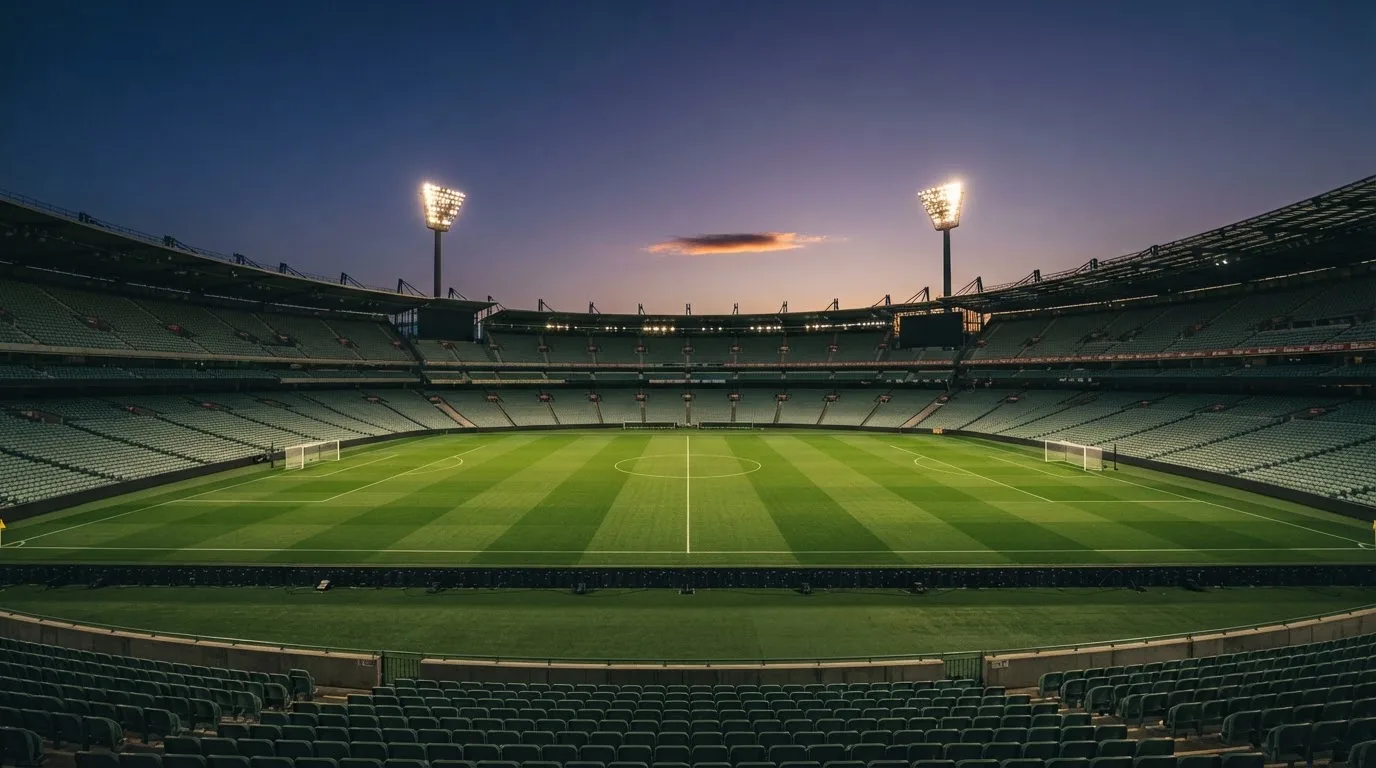
These points matter to a betting prediction because they shape the markets on offer. A bookmaker’s match-result market settles on the ninety minutes plus stoppage time unless the market explicitly says otherwise — “to qualify”, “to lift the trophy”, “to win in extra time” are separate markets with their own prices and their own rules. A bet on a player to score in a shoot-out is a different bet from a bet on that player to score in normal time, and the difference between the two is settled by the rule, not the price. A bet that includes extra time and a bet that does not are settled by the same kind of rule, and a serious reader of football markets knows which rule applies before the price catches their eye.
The competitive picture in 2026 is anchored by the league season. The 2026–27 Premier League runs from 21 August 2026 to 30 May 2027, with twenty teams, three promoted clubs — Coventry City, Ipswich Town and Hull City — and Arsenal as defending champions. The international year was settled in the summer, when Spain beat Argentina 1–0 after extra time to win the 2026 FIFA World Cup final on 19 July 2026. These are the dates that frame a season’s predictions, and the markets that go with them sit one competition at a time: a Champions League group stage and a domestic league are settled by different rules, and a World Cup final and a third-place play-off are settled by different markets again.
The Statute Behind the Licence
The framework that decides who may take a bet from a customer in Great Britain is the Gambling Act 2005, which covers England, Scotland and Wales; Northern Ireland sits outside the Act and has its own older law, and a Great Britain licence is not a Northern Ireland licence. The regulator is the Gambling Commission, a non-departmental public body sponsored by the Department for Culture, Media and Sport. The Commission’s job is to license the commercial market, to police its licence conditions and codes of practice, and to keep the public register that lists every licensed operator.

The single most important rule for a customer-facing comparison is the requirement that has applied since the Gambling (Licensing and Advertising) Act 2014: an operator whose remote facilities are used in Great Britain needs a Commission licence wherever it is based. A Curaçao, Maltese or Gibraltar licence is not a substitute, and a brand licensed only offshore is not licensed at the point of consumption. The corollary is that the licence holder on the Commission’s register, not the trading brand on the website, is the entity the regulator holds to account, and a brand the customer thinks of as one company may sit beside another under one holder — Ladbrokes and Coral both sit under LC International Limited, for example.
There is no state monopoly and no cap on the number of licences, and the licence types relevant to a football bet are remote general betting standard (real events) — the standard online sportsbook licence — and remote betting intermediary, the licence a betting exchange runs under. Each operator in the comparison above holds a remote general betting standard (real events) licence. Esports, virtual events, pool betting and pool betting on horse or dog racing each have their own category. Financial spread betting sits outside the Commission’s remit and is regulated by the Financial Conduct Authority — which is why Spreadex, for example, holds an FCA licence for spread betting alongside its Gambling Commission licence for fixed-odds betting and warns that spread betting losses can exceed deposits.
The test of whether a brand holds a Commission licence is the register itself. It can be searched by business name, trading name, domain or account number, and the access date of any search should sit beside the answer it returns — licence statuses change. The minimum age for gambling in Great Britain is 18, and licensed operators verify name, address and date of birth before a customer can deposit or gamble (since 7 May 2019), including with a free bet or bonus. Identity verification is not optional: anonymous play at a licensed site is not available, and the verification step is part of the cost of being licensed.
What May and May Not Be Bet On
No statutory list of permitted bets or markets exists. A licensed operator offers the markets its licence allows under its own rules and the Licence Conditions and Codes of Practice, and the regulator’s role is to police those rules, not to approve each market one at a time. In-play betting on football is offered by every GB bookmaker in the comparison above, and the controls are the operator’s licence conditions and customer-protection duties — never write that in-play is “unrestricted” as a legal conclusion, because that is not what the statute says. Esports are treated like any other event; virtual events are a separate licence category; bets on politics, TV shows and novelty markets are offered by GB bookmakers and no statutory prohibition was found.
Betting exchanges run under the betting intermediary licence, and the rates and rules specific to exchanges — commission, lay bets, the back-and-lay mechanic — are stated only from each exchange’s terms. Spread betting that is not a financial product sits inside General Betting Duty. Off-course pool betting on horse or dog racing is a separate licence and a separate duty. There is no statutory cap on stakes in sports betting: operators set their own maximum stakes and may restrict customers, and a maximum stake that applies during bonus clearing is not the same as a flat stake limit.
Player Protection and the Responsible Gambling Toolkit
Three layers of protection sit between a customer and a problem. The first is GAMSTOP, the national multi-operator online self-exclusion scheme, a mandatory licence condition for online operators since 31 March 2020. A self-exclusion through GAMSTOP runs for six months, one year, five years, or five years with auto-renewal; after the minimum period the exclusion stays in place for a further seven years unless the customer asks GAMSTOP to remove it. GAMSTOP covers online sites and apps; betting shops use a separate service. The second is the financial vulnerability check that applies to licensed remote betting under LCCP condition 3.4.4, in force since 30 August 2024: when a customer’s deposits minus withdrawals exceed £150 in a rolling 30 days (since 28 February 2025), the operator runs a public-record check — bankruptcy, county court judgments — not an income check and not a credit reference check. The third is the deposit-limit regime under RTS 12, the first phase of which has applied since 31 October 2025 and a second phase postponed to 30 September 2026 — operators must offer a gross deposit limit on a fixed time frame, though whether the second phase is live is not established. There is no state-set deposit or loss ceiling: limits are the customer’s choice.
Financial risk assessments — the affordability checks of the press — were announced in a staged plan in a Commission article of 7 July 2026, with no start date, and they sit separately from the financial vulnerability check that is already in force. None of these tools are advertised as the answer to a gambling problem. The help lines that do that job are GamCare (which runs the National Gambling Helpline), GambleAware, the NHS gambling clinics network, and Gamblers Anonymous. A licensed operator’s safer-gambling page should link to these services directly, and a bettor who is reading the small print of an offer at three in the morning has the same access to those links as a bettor who is not.
The credit-card ban that has applied since 14 April 2020 (LCCP condition 6.1.2) sits alongside the protection regime: credit cards are not a permitted funding method for gambling in Great Britain, including credit-card-funded payments through an e-wallet, while debit cards and bank-based payments are not covered by the ban. Identity verification before the first deposit means no anonymous play at a licensed site, and source-of-funds questions at higher spend are normal under the money-laundering rules — not a sign of trouble, but a sign of a licensed operator doing what the rules require.
The Mobile App and the Betting Experience
A football bet is rarely placed from a desktop at a desk. The pattern is closer to a phone in a hand at half-time, a tablet on a sofa in front of a Saturday kick-off, or a watch notification when a price moves on an in-play market. The mobile app is, for most customers, the product. What makes a good one is not the headline feature count but the friction on the path from “I have an idea” to “I have a bet”.
Three things earn their place on a football betting app: a fast path from fixture to market to slip, a live section that updates prices without a manual refresh, and a Cash Out button that settles the bet the moment it is pressed. LiveScore Bet, for example, takes Visa and Mastercard debit cards, Apple Pay, PayPal, Pay by Bank (Open Banking) and Revolut Pay, which is a deliberately broad funding menu for a customer who may be moving money from a debit card, a current account and an e-wallet in the same betting session. 888sport offers pre-match and in-play football with Cash Out, a Bet Builder, BetFinder form tools, a live bet feed and daily boosted odds — the kind of bundle aimed at the bettor who places several singles and accas through a Saturday. BoyleSports, Ladbrokes, William Hill, Hollywoodbets and 10bet each carry Bet Builder and Cash Out as standard, alongside in-play and a live stream on selected events.
The differences are in the corner cases. Star Sports’ App Store listing describes the brand as the UK’s leading independent bookmaker, which is the operator’s own framing and is reproduced here only to identify the product — its sportsbook sits alongside virtual sports, casino and live casino, which makes it a different kind of bundle from a football-first operator. Lottoland’s app is a casino, lottery, sports and scratchcard bundle in one, and a customer who finds the sportsbook through the lottery product is a real customer profile. Midnite’s site, which falls outside the licensed set reviewed below but illustrates the in-play and bet builder pattern, shows in-play events, an acca builder, popular accas and price boosts with maximum-stake limits — a useful prompt that an enhanced-odds headline is one thing and the maximum stake on it is another.
The browser experience has not gone away. A desktop session is still where most pre-match research happens, and the same account works on both. What has gone is the assumption that the two paths behave the same way, and a serious operator builds the mobile product first and the desktop second.
Building a Prediction: From Form to Stake
A prediction becomes useful at the moment it lands on a price. The mechanics are six steps, and each one is a place where a prediction can either sharpen or fall over.
The first step is the form read. A team’s last six results, weighted by the difficulty of the opposition and split by venue, give a rough sense of the direction of travel. Form on its own is not a forecast, but form out of line with the market’s read is the first place to look. The second step is the underlying statistics: expected goals, big chances, set-piece share, pressing intensity, errors leading to shots. A side that is creating more than it is conceding but losing matches — the “playing better than the results suggest” pattern — is a side whose next match may be priced too big by the market. The third step is the team news: line-ups are confirmed roughly an hour before kick-off in the Premier League and the Champions League, and the price reaction in that window is a market-wide revision. The fourth step is the implied-probability read of the price itself: take the decimal odds, take one over them, and you have the implied probability; sum the implied probabilities of the three match outcomes (home, draw, away), and the gap above one is the bookmaker’s margin on that market.
The fifth step is the value judgement. The form book, the statistics and the team news produce a set of probabilities for the three outcomes. The market produces another set, with a margin baked in. If the form book, the statistics and the team news jointly say the home side has, say, a 55% chance of winning and the market — once the margin is pulled out — says the same side has a 45% chance, the home side’s price is bigger than the chance justifies and that is a value bet. The sixth step is the stake. A value bet of 4/6 at an edge of ten points is not the same stake as a value bet of 5/1 at an edge of five points; a flat stake on every bet is a stake plan, and it is not the only one. A level-stake plan, a percentage-of-bank plan and a Kelly-style plan each carry their own logic and their own risks, and a bankroll discipline that survives a bad run is one that treats the bank as a finite resource and a single bet as a small fraction of it.
Calculating the margin is a step in understanding the price of a football bet. A two-way market — such as an over/under 2.5 goals line — set at decimal odds of 1.90 against 1.90 implies an implied probability for each outcome. The bookmaker’s payout share is found by dividing one by the sum of the inverse of each price. In this example, the payout share is roughly 95%, meaning the bookmaker’s margin is 5% — the portion of every pound staked kept by the bookmaker on average. A typical match-result market with three outcomes carries a higher margin of 5–8% before enhanced prices or boosts are added, and in-play markets on single goals can run higher still as the bookmaker actively manages risk. This margin is the cost of running the book and providing the market, and it sits within the price offered to the bettor.
Staking is where the prediction becomes a bet. A bettor who judges a price to be 5% larger than the true chance of the outcome and stakes 1% of the bank on it is, on average, ahead over many bets at that edge; a bettor who judges the same edge and stakes 10% of the bank is ahead by more per win but bankrupt on a moderate losing run. The discipline is in sizing the stake to the edge, and the discipline that survives a bad run is the discipline that sizes the stake as if the bad run will come.
What an Offer Really Costs: Reading the Small Print
A welcome offer is rarely what it looks like at first reading. The headline is the headline; the small print is the offer. Three clauses decide what an offer is worth to a customer who claims it.
The first clause is the qualifying condition. A welcome offer that asks for a first deposit of £10 and a first bet on a football accumulator of three legs or more at odds of 4/1 or greater is asking for a specific bet, not a specific outcome; a customer who deposits £10 and places a single at 1/2 has not qualified. The second clause is the wagering requirement. From 19 January 2026, the LCCP promotion rules cap wagering requirements on bonuses at 10x — a £10 bonus with a 50x wagering requirement is no longer lawful, and a £10 bonus at 10x needs £100 of qualifying bets. The cap is a ceiling on the multiplier, not on the amount of time the customer has to meet it. The third clause is the expiry and the cap. A free bet that pays back the stake as a free bet credit and expires in seven days is not a refund; the stake is gone on a loser and gone on a winner, and what comes back is the winnings of the free bet, not the free bet itself. A refund on a first losing accumulator up to £30 has a different shape: the stake is lost and the refund is a free bet, and a customer who reads the headline as “money back if my first acca loses” is reading the wrong offer.
Mixed-product promotions — an offer that requires gambling on two or more product types, such as “bet on football to get free spins” — are banned under the same set of rules. A welcome offer at a licensed GB bookmaker is either a single-product offer or it is not a welcome offer at all. Advertising is policed by the ASA under the CAP Code (non-broadcast) and the BCAP Code (broadcast), alongside the LCCP marketing conditions; CAP Code section 16 says marketing must be socially responsible and must not be of strong appeal to under-18s, and the whistle-to-whistle ban on TV betting ads around live sport (since 1 August 2019, before the 9pm watershed) is an industry code, not statute. The Premier League clubs’ voluntary withdrawal of gambling sponsorship from the front of matchday shirts (from the 2026/27 season; sleeves and hoardings remain) is voluntary, not law.
The tax point is separate and is worth saying plainly: a customer in Great Britain pays no tax on betting winnings. The bookmaker pays General Betting Duty on its gross profits at 15% until 1 April 2027, when a new 25% remote betting rate applies within it, while remote bets on UK horse racing, self-service betting terminal bets, pool betting and in-person betting stay at 15% (HM Government policy paper of 26 November 2025). Whether operators pass duty on through odds is not established, and a statement that the player is charged duty is wrong. Spread betting has its own rates: 3% financial, 10% other. None of this changes the punter’s take-home on a winning bet at a GB bookmaker, and a professional gambler should ask HMRC or an adviser.
Offshore and the Loss of Licence-Grade Protection
An unlicensed brand is a brand without a Great Britain licence. The point of saying this plainly is not to moralise about offshore operators; it is to set out what is missing. A customer who bets with an unlicensed brand has no GAMSTOP coverage, no Gambling Commission complaints route, no approved dispute-resolution body, no British consumer redress if funds are withheld, no protection under the £150 financial vulnerability check, no protection under the 10x bonus cap, and no guarantee that the brand will pay out at all. The brand’s own rules apply, and the brand’s own jurisdiction applies, and the difference is felt at the moment a withdrawal stalls or a complaint goes nowhere.
Providing gambling facilities in Great Britain without the licence the Act requires is an offence under section 33 of the Gambling Act 2005 — aimed at the operator, not the customer. No offence aimed at a customer who merely bets on an unlicensed site was found in the statute; the loss to the customer is the loss of protection, not a criminal record. Enforcement against unlicensed operators runs through cease-and-desist notices, search-engine referrals, registrar and payment-provider work, and the court-order DNS blocking powers the Commission has been given or is about to receive — ISP blocking is not in operation as a standing policy and should not be written as such.
The honest framing is symmetric. A licensed brand is a brand with checks (identity, vulnerability, deposit limits), with GAMSTOP coverage, with the bonus cap, with a Commission complaints route and a regulated dispute-resolution body — and a brand that cannot offer anonymous play or credit-card deposits. An unlicensed brand is a brand with none of those protections and a real chance of funds being withheld at withdrawal. Neither is “the safe choice” by default; the licensed route is the route with a regulator behind it.
The Reviewed Bookmakers in Detail
10bet
10bet is a sportsbook-led brand whose App Store listing names football, tennis and horse racing as the three core products, with Cash Out, Bet Builder and Live Streaming on the football side. The licence holder is Blue Star Planet Limited, against Gambling Commission account 43173, and the brand sits on the Commission’s register under a remote general betting standard (real events) licence. The football product is the spine of the book; the bet builder is a meaningful addition for the accumulator customer, and live streaming on selected events lifts the in-play experience off a price-only feed. The risk is the absence of a British heritage brand behind the licence — the registered holder is a relatively young company, and a customer who values a long operating history elsewhere may want to look at one of the names below. For the customer who wants a focused football product with the modern toolset, 10bet fits.
Star Sports
Star Sports describes itself as the UK’s leading independent bookmaker, and the licence holder is Star Racing Limited, against Commission account 9177. The sportsbook sits alongside virtual sports, casino and live casino, which makes Star Sports a different kind of bundle from a football-first brand — a customer coming to Star Sports for football will also find the casino tab, the virtual tab and the live casino tab. For a customer who wants an independent bookmaker and a one-stop product, that bundle is the point; for a customer who wants a tightly curated sportsbook without casino, it is more than was asked for. The brand’s pitch is its independence, and the licence is a real one.
LiveScore Bet
LiveScore Bet’s licence holder is LiveScore Betting and Gaming (Gibraltar) Limited, against Commission account 56859, and the funding side accepts Visa and Mastercard debit cards, Apple Pay, PayPal, Pay by Bank (Open Banking) and Revolut Pay — a deliberately broad menu for a customer moving money from a debit card, a current account or an e-wallet. The product is football-led and carries the same Best Odds Guaranteed equivalent on UK and Irish racing that other major brands run. The brand sits inside a wider LiveScore media business, and a customer who follows football scores through the LiveScore app has a familiar door into the betting product. It is a natural choice for anyone already using the LiveScore ecosystem.
Lottoland
Lottoland’s licence holder is EU Lotto Limited, against Commission account 38991, and the app bundles casino, sports, lottery betting and scratchcards. The brand is best known as a lottery product — the customer who knows Lottoland for lottery lines and syndicate betting may not have met it on the sports side. The sportsbook sits inside the app rather than standing on its own, and a customer looking for a dedicated football product would find a smaller, integrated offering. Given its heavy focus on lottery products, sports-only bettors might prefer a more specialised platform.
888sport
888sport’s licence holder is 888 UK Limited, against Commission account 39028, and the product is the most feature-dense in the comparison: pre-match and in-play football, Cash Out, Bet Builder, racing streams, BetFinder form tools, a live bet feed and daily boosted odds. The bundle has earned its space at the top of a feature comparison. The bettor who values tools — the BetFinder form helper, the live feed, the daily boosts — has a meaningful set of additions to a standard sportsbook, and the bettor who wants a clean, simple betting slip has more buttons than they need. The licence holder is an established UK-facing business. It represents a top-tier choice for tech-heavy bettors.
Kalooki Sportsbook
Kalooki Sportsbook’s licence holder is Kalooki Sportsbook Limited, against Commission account 57730. The product carries in-play football, daily boosts, extra place races and instant bank-transfer withdrawals — the withdrawal speed is the differentiator, and a customer who values a fast payout on a winning acca has a clear reason to be here. The brand is smaller than the household names in the comparison, and the football market depth is narrower than the bigger books; the bettor who values a deep in-play offering may want a bigger book, and the bettor who values a fast payout will find it. For the payout-first customer, Kalooki is the standout in the comparison.
Ladbrokes
Ladbrokes’ licence holder is LC International Limited, against Commission account 54743, the same holder that runs Coral. The product carries odds boosts on horse and greyhound bets, in-play football, Acca Boosts and Best Odds Guaranteed on UK and Irish racing. The brand has a long British heritage, a wide football market, and the corporate structure that pairs Ladbrokes with Coral under one holder — a customer who keeps an account at one and an account at the other is keeping two doors into the same building. The advantage is the breadth of product and the long British record. It is a reliable, high-volume platform that suits bettors who prefer established names.
William Hill
William Hill’s licence holder is WHG (International) Limited, against Commission account 39225, and the differentiator on the racing side is the Best Odds Guaranteed policy: from 8 AM on the day of the race, on both single and multiple bets, with ante-post, tote and pari-mutuel bets excluded. The football product carries the standard in-play and bet builder toolset. William Hill is the longest-established British brand in the comparison, and the holder has the regulatory record that goes with that. This legacy makes it a staple for traditionalist punters.
BoyleSports
Boylesports’ licence holder is Boylesports Enterprise, against Commission account 39469. The product carries Acca Insurance on football accumulators — a free-bet refund up to £20 if one leg lets a qualifying acca down, with a £5 minimum stake, minimum odds of 1/2 per leg, bets placed and settled on the same day, the free bet expires in seven days, opt-in required. The acca insurance is the headline feature, and a customer who plays football accumulators will read the small print carefully: a £5 stake with all legs at 1/2 is the floor, not the ceiling, and the £20 cap is a real cap on a big-priced acca. For an accumulator customer who plays within those limits, BoyleSports fits; for a customer whose accas are bigger-stake or bigger-priced, the cap will bite.
Hollywoodbets
Hollywoodbets’ licence holder is Hollywoodbets International UK Limited, against Commission account 53028. The product carries a stake-back welcome: a new player who deposits £10 or more by card gets their stake back as a free bet of up to £30 on the first qualifying losing accumulator — stake £10+, three legs or more, odds of 4/1 or greater, settled within seven days, one free bet per customer. The free bet is a free bet, not a cash refund, and the stake of the losing acca is gone. The product also carries Bet Builder, Cash Out and live streams. For a customer who wants a stake-back welcome, Hollywoodbets is one of the few licensed GB brands that frames its welcome as a stake-back rather than a deposit match, and the trade is the qualifying acca. For the accumulator customer, it fits.
The Margin in Practice
The arithmetic of a margin is the arithmetic of a price minus the chance of the outcome. Take an illustrative two-way market at decimal odds of 1.90 against 1.90, where every pound staked on one side returns £1.90 if it wins. The payout share of the market — the share of every pound staked that the bookmaker returns to customers on average across both outcomes — is one divided by the sum of one over each price, which on 1.90 and 1.90 comes to roughly 95%. The margin of the market — the share of every pound staked the bookmaker keeps on average — is one minus that figure, which is roughly 5% of every pound staked. A real match-result market with three outcomes — home win, draw, away win — carries a margin of roughly 5–8% before price boosts are layered on, and an in-play market on a single goal carries more because the bookmaker is managing risk in real time. The figure on the symmetric 1.90/1.90 market is a floor: it is what a price looks like before the market adds the cost of running the book, hedging the liability and taking a position on the match.
The practical read is this. A price of 1.90 against 1.90 implies a probability of roughly 52.6% on each outcome, summing to 105.3% across the market; the 5.3 points above 100% are the margin. Pulling the margin out gives a fair probability of roughly 50% on each outcome, which is what a symmetric match should price at before the bookmaker takes a cut. A bettor who reads 1.90 as “just under evens” and treats the implied probability as 50% has already lost the margin to the bookmaker on every bet, and the only way to come back is to find prices where the form, the statistics and the team news together suggest the outcome is more likely than the price’s implied probability allows.
A Stake Plan That Survives a Bad Run
The point of a stake plan is to give the bank a shape the bank can survive. Three plans are common in the literature, and each carries its own logic. A level-stake plan stakes the same amount on every bet — say, £10 — and the bank’s path is the sum of many £10 bets and many £10 wins. A percentage plan stakes a fixed percentage of the current bank — say, 2% — and the stake shrinks after a losing run and grows after a winning run, which protects the bank against a sharp drop and gives the upside room to compound. A Kelly-style plan stakes a fraction of the bank proportionate to the perceived edge — half-Kelly or quarter-Kelly is a common moderation of the full Kelly — and the stake is bigger when the edge is bigger.
The level plan is the easiest to administer and the hardest to ride through a bad run, because the stake never adjusts. The percentage plan is the most common in serious betting literature, and a 1–2% bank is the standard rate. The Kelly plan is the most profitable on paper and the most volatile in practice, and a bettor who runs a full Kelly stake on a thin edge will see the variance between winning and losing runs do real damage to the bank.
The discipline that survives a bad run is the discipline that treats the bank as finite, the edge as uncertain, and the stake as a fraction of the bank rather than a fixed sum. A bad run at flat stakes is a slow leak; a bad run at full Kelly is a hole in the hull.
Frequently Asked Questions
How do you actually bet on football predictions?
Pick a betting model. Start with the form read, add the underlying statistics, layer in team news, then read the price. The bet is the final step, and a serious tipster shows the work before naming the stake. A prediction that does not say why it is a prediction is a tip.
What is a value bet, and why is no tip ever certain?
A value bet is a price that is larger than the true chance of the outcome justifies. Pull the margin out of the price, compare the implied probability to the form-and-statistics read, and look for a price that sits a couple of points above the joint read. The price is bigger than the chance; the bet is value. The losing bet at value still loses, and a value plan makes money over many bets, not every one.
What is the bookmaker’s margin, and how can it be seen in the odds?
The margin is the share of every pound staked the bookmaker keeps on average. Take a two-way market at decimal odds of 1.90 against 1.90: one over each price sums to 1.0526, and the 5.26 points above 1 are the margin. A three-way match-result market sits higher, typically 5–8%, and an in-play market on a single goal sits higher still.
How is the return on a bet worked out from the stake and the odds?
The return on a winning single is the stake multiplied by the decimal odds. A £10 stake at decimal odds of 2.50 returns £25 — £10 stake plus £15 profit. A combination bet multiplies the odds of the legs together: three legs at 2.00, 3.00 and 4.00 produce a combined price of 24.00, and a £10 stake returns £240 if all three legs win.
How can it be checked that a bookmaker holds a Gambling Commission licence?
Search the Commission’s public register by business name, trading name, domain or account number. The licence type, the licence holder and the trading names on the licence are all on the register, and the access date of the search should sit beside the answer. The register is the only honest test of who is licensed.
Which tools for controlling play does a licensed bookmaker have to offer?
A licensed operator offers a deposit limit, a time-out, a product restriction and a self-exclusion; participates in GAMSTOP for online self-exclusion; runs the £150 rolling-30-day financial vulnerability check; and links to GamCare, the National Gambling Helpline, GambleAware, the NHS gambling clinics and Gamblers Anonymous on its safer-gambling page. The specific menu varies by operator, and the safer-gambling page is the place to check.
Football – Socceroddshub.com
Content created by the «Socceroddshub.com» team
