
Cricket betting tips: how a tip is built, why no tip is certain, and where value sits
 Available in US
A cricket tip is a forecast written in two sentences and priced by someone whose living depends on being wrong as often as right. The job of this guide is to show what goes into the forecast, what the price already knows, and where the gap between them is worth staking on. No tip survives contact with the next ball, and the math that sets the price says so out loud: the bookmaker’s margin sits inside every quote, every promotion is a giveaway with strings, and the only thing a tipster can change is how often the price on offer looks generous against the chance they have assessed.

The page is a guide, not a tip sheet. There are no picks, no predicted results, no invented odds. What there is, in order: a ten-bookmaker shortlist for Great Britain and how the comparison was framed; what a value bet actually is and how the margin hides inside the odds; the law that covers betting in Great Britain, what the regulator requires, and where the protection sits; safer-gambling tools and what they cost the punter in freedom; the bonuses and free bets the market advertises and what each one really takes in turnover; cricket on mobile, in-play and the cash-out button; how a tip is constructed and why no system beats the margin for long; the bet types, the odds formats and how a return is worked out; and the formats and tournaments a bettor needs to know to read the schedule.
Current as of October 30, 2026 against the Gambling Commission’s public register and the operators’ published terms.
The ten bookmakers this guide covers — and the criteria that put them there
Ten brands make up this shortlist. They all hold a remote general betting licence from the Gambling Commission for Great Britain, which is the only test the regulator publishes for online play. None is presented as the best cricket bookmaker; each is presented as a different shape of bookmaker, with a different pitch, and the table below is the comparison the page builds every other section on.
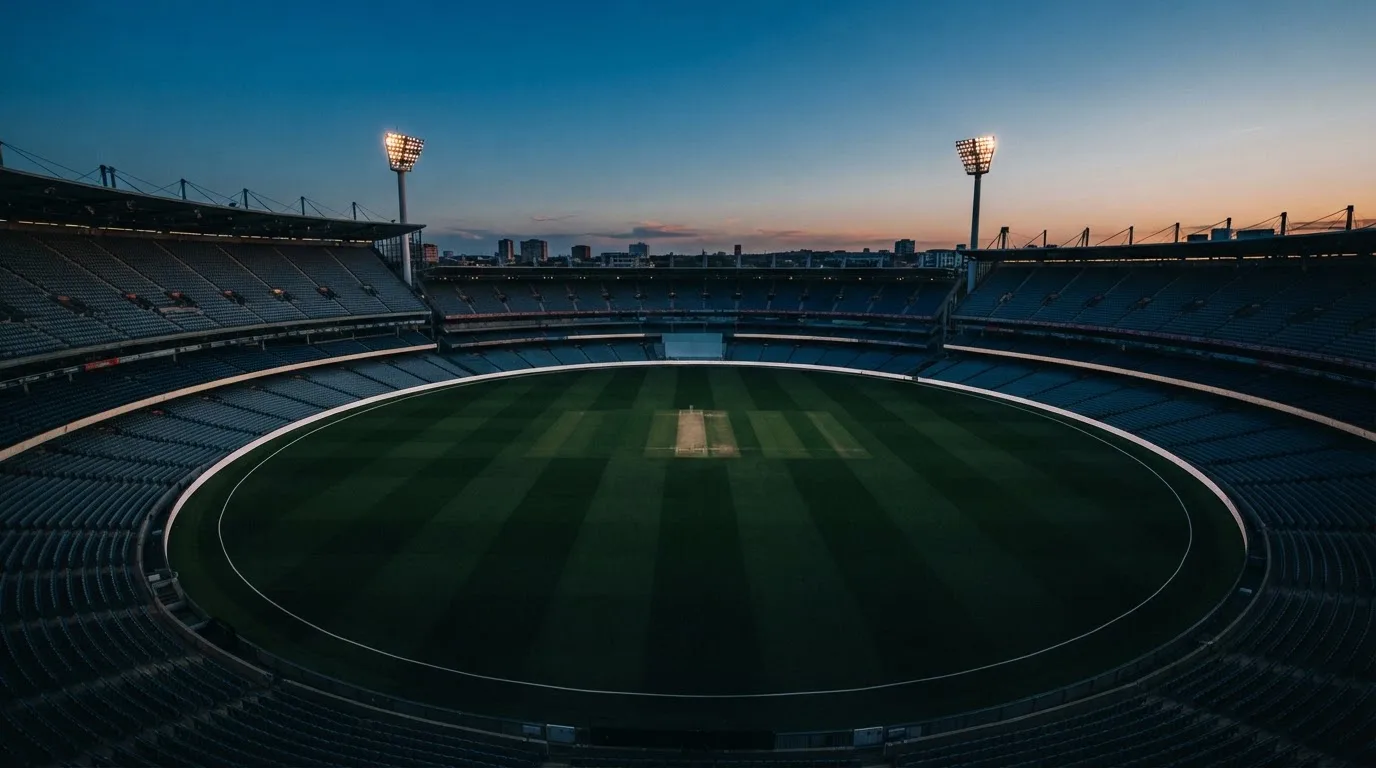
The columns the table works with are the licence number and licence-holder name as they appear on the Commission’s register, and what each operator’s own published terms say on the page’s subject — the rules a cricket punter reads before staking. A column of dashes is worse than no column at all, so anything the operators do not state is left out rather than padded.
| Brand | Gambling Commission licence | Licence holder | What the terms say on cricket betting |
|---|---|---|---|
| Paddy Power | Account 39439 | PPB Counterparty Services Limited | Bet Builder+, Super Sub (a selected player is replaced and the bet rolls on), expanded Win More markets and player and ACCA stats |
| Ladbrokes | Account 54743 | LC International Limited | In-play betting, odds boosts, acca boosts and Best Odds Guaranteed on UK and Irish racing |
| Fitzdares | Account 400 | Fitzdares Limited | Antepost and in-play markets across horse racing, football, tennis, rugby, cricket, golf and American football, with cash out and Lucky 15s |
| Lottoland | Account 38991 | EU Lotto Limited | Sports betting alongside casino, lottery betting and scratchcards, licensed by the Commission for GB customers |
| Swifty Sports | Account 58957 | Swifty Global (UK) Ltd | Best Odds Guaranteed, Cash Out on racing and football, daily price boosts, live streaming and in-play betting |
| Hollywoodbets | Account 53028 | Hollywoodbets International UK Limited | Welcome offer is a free-bet refund on a first qualifying losing accumulator (3+ legs, minimum odds 4/1, settled within 7 days) |
| 888sport | Account 39028 | 888 UK Limited | Pre-match and in-play betting, Cash Out, Bet Builder, racing streams, BetFinder form tools, live bet feed, daily boosted odds |
| BetTom | Account 64959 | Bet Tom Limited | Welcome offer is 50% back as a free bet up to £50 plus 50% back as free slot funds up to £50 |
| Sky Bet | Account 67370 | SBG Sports Limited | Welcome offer is three £10 free bet tokens after a £5 deposit and a first single or each-way bet of at least 5p at 1/1 or greater |
| BetGoodwin | Account 2927 | Goodwin Racing Limited | Best Odds Guaranteed on all UK and Irish horse and greyhound racing, up to £1,000 |
A licence does not make a brand a good cricket bookmaker. It is the floor: the brand takes part in GAMSTOP, accepts the social responsibility code, runs the safer-gambling tools the regulator requires and has agreed to the dispute-resolution route. The pitch the brand then makes — what its site says it does well — is what each operator’s row above is taken from.
The criteria that built this list, in the order they were applied, are these. First, a Gambling Commission remote licence for general betting on real events, verified against the register. Second, a published cricket offering that goes beyond a single match market, even where the offering is described in the App Store rather than on the main page. Third, a presence in Great Britain on terms that the regulator recognises — .com and .co.uk are both admissible; what matters is the licence. Fourth, a published welcome incentive or product shape that a cricket punter can compare. The list is not exhaustive. The Commission’s register lists far more licensed brands than any page features, and no brand on it has any right to be called the only licensed one.
The table ends here by design. A column on margin by event would invite prices that research does not give; a column on minimum stake by event would invent rules no operator publishes uniformly; a column on payout speed by cricket would conflate withdrawal times that apply to football punters and racing punters with ones that apply to cricket punters. Where research does not carry a value, the table does not ask the question.
Cricket in fifty words — and why the format matters before the bet
A cricket side has eleven players. The sport has three international forms: Test matches, One Day Internationals and Twenty20, each with its own length, its own ball-by-ball rhythm and its own kind of market. A tip that does not name the form is not a tip; it is a guess wearing a number.

A Test match runs up to five days, with each side batting up to two innings and a minimum of ninety overs scheduled per day. A match that neither side wins is a draw, which is its own betting outcome: the draw is not a punt on a tie, it is a punt on the third result a Test can produce. The longer the match, the more the form book and the pitch report matter and the less a single session swings the price.
In an ODI each side bats a fixed fifty overs, and a tied scoresheet is a tie — it does not go to a super over. Rain is part of the story. In rain-affected ODIs the Duckworth-Lewis-Stern method usually sets the target or result, and if too few overs are bowled (usually under twenty) the match is a no result. A bettor who has priced a side to win a fifty-over match and then watched the rain take the innings to twelve overs has paid for a fifty-over match and received a Duckworth-Lewis-Stern verdict — and the markets that settled differently under the rain are the ones the next punter reads twice.
In Twenty20 each side bats a maximum of twenty overs, a bowler may bowl at most four, and a tied match goes to a super over. T20 is the format the bookmakers price most aggressively and the one the tipsters tip most confidently — partly because the result is over in three hours and partly because twenty overs is short enough that one batter’s innings can swing the line by a run a ball. The shorter the match, the more a single player’s form dwarfs the team form; the longer the match, the more the team form, the pitch and the weather take over. A tipster working off form alone is working the wrong scale.
The law that covers cricket betting in Great Britain
The Gambling Commission licenses the whole commercial market under the Gambling Act 2005, which covers England, Scotland and Wales. Since the Gambling (Licensing and Advertising) Act 2014 an operator whose remote facilities are used in Great Britain needs a Commission licence wherever the operator is based. A Malta, Curaçao or Gibraltar licence is not a substitute, and the test of whether a brand holds a GB licence is the Commission’s public register, searched by business name, trading name, domain or account number. Every brand named on this page appears there.
Betting exchanges run under a separate licence category — a betting intermediary licence — and rates specific to exchanges (commission on net winnings, for example) come from each exchange’s own terms. Financial spread betting is regulated by the Financial Conduct Authority, not the Commission, and losses on it can exceed deposits — a different product entirely. Cricket sits under remote general betting standard (real events), alongside football, tennis and horse racing; the licence does not single cricket out, and the controls are the operator’s licence conditions and the Licence Conditions and Codes of Practice, not a cricket rulebook.
Player protection is built into the licence. Identity is verified before the first deposit: name, address and date of birth are checked, and the check applies to a free bet or a bonus just as it does to a real-money stake. There is no anonymous play at a GB-licensed site. Since 31 March 2020 GAMSTOP is a mandatory condition for online operators, which means every brand on this page takes part and a punter who has self-excluded through GAMSTOP cannot open a new account, deposit or play through any of them. Since 30 August 2024 a financial vulnerability check applies once a customer’s deposits minus withdrawals cross £150 in any rolling thirty days (the threshold is in force from 28 February 2025): it is a public-record check, not a credit reference check, and the same question has to be asked only once across the licensed market. A separate financial risk assessment — the deeper affordability check the press calls “affordability checks” — has been announced in a staged plan, with no start date written into it.
Bonuses are not unregulated. Since 19 January 2026 wagering requirements on bonuses are capped at 10x: a £10 bonus with a 50x turnover, which used to mean £500 of qualifying bets, is no longer allowed, and a bonus at the cap carries no more than £100 of turnover. Mixed-product promotions — an offer that ties betting to casino spins, or bingo to lottery tickets, or vice versa — are banned outright. Free bets whose stake is paid back with a winning bet are not a bonus in this sense and sit outside the cap; a free bet whose stake is not paid back is, in the covered merchandise and in the wording of the LCCP, a stake that does not return, and a tipster who talks about the value of one is talking about a stake that the punter cannot recover. The question of whether the cap applies to free bets with no wagering condition, and the cap on the money value of a bonus, are not established; the ten offers on this page are described from each operator’s terms, not from the cap.
Credit cards are banned for gambling in Great Britain since 14 April 2020, including credit-card-funded payments through an e-wallet; debit cards and bank-based payments are not covered by the ban. Cryptocurrency is not statutorily prohibited, but no GB-licensed operator publishes it as a deposit method, and a tip that recommends paying in bitcoin at a licensed bookmaker is recommending something the regulator has not licensed as a payment. The player pays no tax on betting winnings; General Betting Duty is the operator’s tax on gross profits (15%, with a 25% remote rate from 1 April 2027 within it on non-UK-horse-racing remote bets), and whether the operator passes any of it on through the odds is not established.
What may be bet on has no statutory list. An operator holds a licence for a category and offers markets under its own rules and the LCCP. In-play cricket is offered by GB bookmakers and the controls are the operator’s licence conditions and customer-protection duties; writing that in-play is “unrestricted” as a legal conclusion is wrong because the controls are real, even if they are not a list. There is no statutory cap on stakes in sports betting: operators set their own maximum stakes and may restrict customers, and a cricket bookmaker offering the book on a Hundred game is unlikely to pay out at the same scale as the book on a Test match. A stalemated bet — a market the operator has chosen to suspend — is not the punter’s money, it is the operator’s right, and the punter is bound by the suspension.
An unlicensed site is not “the safe choice” by default. It is the choice with no GAMSTOP coverage, no Commission complaints route, no approved dispute-resolution body, no British consumer redress if funds are withheld, and no obligation to honour the bonus cap or the vulnerability check. There is no customer offence in placing the bet; the offence under section 33 of the 2005 Act is on the operator. The Commission’s enforcement runs through cease-and-desist notices, search-engine referrals, payment-provider work and the registrar-and-host cooperation, and the Commission has been given, or is about to receive, court-order DNS blocking powers. Honest framing: licensed means checks, limits, GAMSTOP and the bonus cap, and also identity verification before the first bet; unlicensed means none of those protections and the risk of losing the money.
Safer gambling: the tools, the price, and what a punter trades for them
The safer-gambling tools at a GB-licensed bookmaker are not a one-size box. Each one does a different thing, and the cost to the punter is the freedom it takes away. A deposit limit caps what can go in within a fixed time frame (the operator’s first changes have applied since 31 October 2025, with a second phase postponed to 30 September 2026, and whether it is live is not established). A product restriction excludes a market the operator offers — for example casino, or in-play — for the customer who has decided that one market is the problem. A player profile test asks a customer to fill in a self-assessment form, which the operator then uses to set the level of contact, marketing and intervention.
Self-exclusion is the heaviest of the tools and the one with the longest tail. GAMSTOP offers six months, one year, five years, or five years with auto-renewal, and after the minimum period the exclusion stays in place for a further seven years unless the customer asks GAMSTOP to remove it. Every brand on this page is a member; an excluded customer cannot open an account, deposit or play. The cost is the licence the punter has given up for the period chosen, and a brand that detects a self-excluded customer trying to play is required to refuse the bet, hold the funds and report it. The alternative — using an unlicensed site to bypass the exclusion — costs the punter the protections named in the previous section and any right to dispute a payout.
Help outside the operator sits with GamCare (which runs the National Gambling Helpline), GambleAware, NHS gambling clinics and Gamblers Anonymous. The Commission’s register is the regulator’s own list; it is not a treatment service, and a self-excluded customer who wants help should phone GamCare first, not the Commission. Unibet’s UK site, like several on the shortlist, surfaces these services in the footer; the surfacing is not the help, and a tipster who lists GamCare in a “responsible gambling” section and then offers picks on the same page is offering two contradictory things.
The minimum age for play is 18. The 17+ App Store rating that several operators carry is an age rating for the App Store, not a relaxation of the age rule; an 18-year-old is the youngest a punter can be. Identity is verified before the first deposit, and a tip that recommends a way to bet anonymously is recommending a way that no GB-licensed operator offers.
Bonuses and free bets — what each offer is worth on average
A “free bet” is a stake the operator gives back only if the bet wins; the stake itself is not returned. That is the mechanic and the whole mechanic. A £10 free bet on a winner at 4.00 returns £30 in profit — the £10 stake is gone. A £10 cash bonus that has been credited to the account returns the £10 stake with the winnings — the stake is gone into the bet and comes back out with the profit. The two are not the same product and a tipster who treats them as the same product is pricing the wrong thing.
The free bet’s value to the punter is the price the bet is placed at, minus the margin the bookmaker keeps on the market. A free bet of £10 on a selection priced at 4.00 in a market with a 5% margin returns, on average, £10 × (4.00 − 1) ÷ 4.00 × 0.95 — that is £7.13 of value across many uses of the offer. A free bet on a heavily favoured selection at 1.20 in the same market returns, on average, £10 × (1.20 − 1) ÷ 1.20 × 0.95 — that is £1.58. The free bet’s value is not the £10 the operator credits; the £10 is the size of the bet, and the size of the bet is paid out only if the bet wins. Where the free bet is paid back with a winning bet, the maths change: the £10 stake is returned, and the offer is closer to a cash bonus with the same wagering requirement.
A “risk-free” bet is a free bet credited when a first qualifying bet loses. The credit is a free bet, not a refund in money; the punter who reads “risk-free” as “money back if I lose” has read the wrong word. A price boost is a price the operator has raised on one selection for a limited window, and the limit is usually a maximum stake — a £20 boost at maximum stake £5 is worth up to £5 of the operator’s money. An acca insurance refunds the stake as a free bet if one leg of an accumulator loses; the refund is on the free-bet terms above, not on the cash terms. A cashback is a percentage of net losses over a period returned as cash or as a free bet, and the difference matters: cash cashback can be withdrawn; free-bet cashback cannot.
The welcome offers on this page, in the operators’ own terms, are these. Paddy Power’s site describes Bet Builder+, Super Sub and acca features; the welcome terms themselves come from the App Store listing and are described from those terms. Hollywoodbets credits a free bet of up to £30 when a new player deposits £10 or more by card and the first qualifying losing accumulator (stake £10+, three or more legs, odds of 4/1 or greater, settled within seven days) loses — one free bet per customer. BetTom offers 50% back as a free bet up to £50, with a matching 50% back as free slot funds up to £50 for casino play, the two halves under separate terms. Sky Bet credits £30 in free bets as three £10 tokens after a £5 deposit and a first single or each-way bet of at least 5p at 1/1 or greater. The qualifying bets in each of these offers are price-sensitive: 4/1 is a longer price than 1/1, and a punter who backs a shorter price than the offer names does not qualify.
A bonus with a wagering requirement is what the cap of 19 January 2026 covers. A bonus with no wagering condition — and most free bets on this page have none, because the stake is not returned — is outside the cap, which is the technical reason the offer reads as a free bet rather than a bonus. The wagering calculation that has been banned is the one that asked a punter to turn £10 into £500 of bets before the bonus could be withdrawn; under the cap the same £10 carries at most £100 of qualifying bets. The remaining £400 of turnover is gone. A tipster who recommends clearing a bonus by backing longshots in a market the operator restricts is recommending a path that does not exist; the operator restricts the qualifying market, not the punter.
Mobile, app and the in-play touchscreen
A cricket punter in 2026 bets on a phone. The ten brands on this page all have an iOS app in the UK App Store; several have Android builds direct from the site rather than from the Play Store, and a few have a mobile site that does everything the app does. The differences between the apps are small in shape and large in feel: the Bet Builder, the in-play page, the cash-out button and the live stream are the four features a punter uses every session, and a slow one costs more than it looks.
Bet Builder lets a punter combine selections from one match into one price — top batter, total runs, method of first dismissal — and the price multiplies with the legs. The shape is the same as an accumulator across matches, with the legs tied to the same fixture; a punter who has priced a Bet Builder has priced an accumulator, and the bookmaker’s margin compounds with each leg. Paddy Power’s app names a “Bet Builder+” and a “Popular Bet Builders” feature, and the Super Sub feature rolls the bet over to a replacement player if the selected player is substituted before the bet settles. 888sport’s app offers BetBuilder, BetFinder form tools and a live bet feed.
In-play is the live page of the app. The price updates ball by ball — the over markets and the next-ball markets move faster than the match markets — and the bookmaker’s margin on the live markets is, on average, higher than on the pre-match markets. The cost of in-play is the price the book offers in the same instant the punter taps, and a punter who taps faster than they think has paid for speed. Live streaming ties the in-play page to a feed: horse racing, football and several other sports are streamed on the apps that hold the rights; cricket streams are rarer, and the bettor who wants to watch a Test match on a betting app is usually watching a third-party stream.
Cash out is the button that lets a punter close a bet before the final ball. A punter who backed a side at 3.00 and the team is winning at the halfway mark with the price now at 1.40 can cash out for less than the full return; the cash-out figure is the operator’s offer, not the punter’s right. The cash-out figure embeds the operator’s margin twice — once in the original price and once in the cash-out price — and a punter who cashes out at 1.40 from a back at 3.00 has paid the margin on both sides. The cash-out button is a useful tool when the picture has changed (an early wicket, a weather forecast, a bowler’s spell) and an expensive one when the picture is the same as when the bet was placed.
A tipping app is a different product. The market has dozens of tipster services, most paid; none is regulated in Great Britain the way a bookmaker is, and the tipster’s record is rarely audited by anyone the punter can complain to. A punter who pays £30 a month for tips and lays the tips at a licensed bookmaker is paying for a forecast whose author has no obligation to the regulator and no recourse from the punter if the tips turn out to be the same as a coin toss. The free tips that bookmakers offer are marketing, not analysis, and the same is true of the influencer tips that ride social media.
How a tip is built — and why no system beats the margin for long
A tip is a probability statement and a price. The probability statement is the tipster’s read of the match — form, head-to-head, the pitch, the weather, the line-up — and the price is what the bookmaker is offering for the tipster’s call. The two are equal only when the tipster has read the match and the bookmaker has mispriced it; on every other match the price is the bookmaker’s read plus the margin, and a tipster who places a tip without knowing the price has given half the answer.
Form is the recent record. A side that has won its last five ODIs has, on average, a better chance of winning the next one than a side that has lost its last five; the average hides the run of opposition, the venue and the conditions, and a tip that reads form as a flat count has not read it. Head-to-head is the meeting record, useful in Test cricket where the same sides meet series after series, and noisier in T20 where the line-ups turn over every match. The pitch and the weather matter: a green seamer in England in April is a different pitch from a dry turner in Mumbai in November, and a tip that names the same probability for both has named the wrong number.
The line-up is the single biggest swing in T20. A side missing three first-choice players is not the side that won the last match, and a tip that takes the form table without the line-up has priced the wrong team. The toss matters in the shorter formats: a side that wins the toss and bowls first in a T20 has, on average, won more often than lost, and a tip that prices the side without the toss has not priced the toss.
A value bet is a price that is higher than the probability the tipster has assessed. If the tipster reads a side at 60% to win and the bookmaker is offering 2.00 (a 50% chance), the tip is worth laying: 0.60 × 2.00 = 1.20, and a bet that pays back £1.20 on the pound over many uses of the same read is a positive-expectancy bet. The arithmetic is the heart of a value tip, and the tip that does not name the price is not a value tip, it is a guess. The bookmaker’s margin sits inside the 2.00, and the tipster who has not priced the margin has priced the tip on the bookmaker’s number rather than on their own.
The margin is the bookmaker’s edge and the punter’s tax. In a two-way market priced at 1.90 and 1.90, the payout share is 1 ÷ (1/1.90 + 1/1.90) = 0.5263 and the margin is 1 − 0.5263 = 0.4737, sitting in a band from about 2% on a major match to over 10% on a minor one. A more typical 1.85 and 1.95 two-way line prices in at a margin of about 5%; the punter pays the 5% on every bet, and the tipster who beats the margin by more than 5% over many bets is the one whose tips pay. Beating it on a single bet is the easiest thing in betting: half of all two-way markets end with the favourite winning, and the punter who has backed the favourite at 1.85 has won the bet but lost the value.
No tip is ever certain. A tip is a probability, and the probability is wrong on average half the time, and a system that has won the last ten bets is a system that has run a streak of luck the next bet is unlikely to extend. Bankroll discipline is the only edge the punter has over the tipster: a stake of 1% to 5% of the bank on a single bet, a stop-loss at the level the punter has set before the session, and a record of every bet so the punter can see whether the system is working. The record is the audit; without it the punter is reading memory, and memory edits itself.
Bet types, odds formats and how a return is worked out
A single is one selection on one outcome. A double is two selections whose prices multiply; the price of a double at 2.00 and 3.00 is 6.00, and a £10 double returns £60 if both legs win. An accumulator (an “acca”) is the same shape with three or more legs; the price multiplies with the leg, and a five-leg acca at 1.80 each prices at 1.80^5 = 18.90. The bookmaker’s margin compounds with each leg, and the compounded margin on a five-leg acca is far higher than on a single. An each-way bet is two bets of equal stakes — one on the win, one on the place — and the place terms vary by race and by operator; on a cricket match bet the place terms are the operator’s, and a punter who reads an each-way price without the place terms has read half the bet.
A Bet Builder is the same shape as an acca with the legs tied to one match. The price multiplies; the margin compounds. Paddy Power’s app, 888sport’s app and several others offer the feature, and the price the punter sees is the product of the legs. A Trixie is four bets across three selections (three doubles and a treble); a Patent is seven (three singles, three doubles and a treble); a Yankee is eleven (six doubles, four trebles and a four-fold acca); a Lucky 15 is fifteen (four singles, six doubles, four trebles and a four-fold acca); a Super Yankee or Canadian is twenty-six (ten doubles, ten trebles, five four-folds and a five-fold acca); a Heinz is fifty-seven; a Goliath is two hundred and forty-seven. The total stake is the unit stake multiplied by the number of bets, and a £1 Lucky 15 costs £15. The full-cover bets are ways of paying for a place when the selection does not win, and they are most useful in horse racing where place terms are published; on a cricket match bet the place terms are the operator’s, and the bettor should read them before staking.
The odds formats are fractional and decimal. Fractional odds of 5/1 mean a £1 stake returns £5 in profit plus the £1 stake, a £1 return of £6. Decimal odds of 6.00 mean the same return: a £1 stake returns £6, of which £5 is profit. Fractional odds of 1/2 (the same as 1.5 in decimal) mean a £1 stake returns £0.50 in profit plus the £1 stake, a £1 return of £1.50. Decimal odds are easier to multiply, and a £10 double at decimal odds 2.00 and 3.00 returns £10 × 2.00 × 3.00 = £60. The return is the stake plus the profit; the profit is the return minus the stake; the net profit on a winning free bet is the price minus one, multiplied by the free-bet amount.
The starting price (SP) is the price the bookmaker settles at when no fixed price has been taken, and the rule is the operator’s. Best Odds Guaranteed (BOG) is the operator’s promise that if the SP is higher than the price the punter took, the punter is paid at the SP; Ladbrokes, BetGoodwin and Swifty Sports all name BOG on UK and Irish racing. Rule 4 is a deduction applied when a runner is withdrawn from a race, and the rule is the bookmaker’s; the deduction is not the punter’s choice, and a bet that loses after a Rule 4 deduction is settled to the pay lower. A betting exchange runs under a separate licence — a betting intermediary licence — and lets a punter back and lay; the commission on net winnings is the exchange’s, and the prices on an exchange are set by the customers rather than by the operator.
Formats, tournaments and how the schedule shapes the calendar
The international calendar runs on three formats and three governing bodies. The ICC — the International Cricket Council — governs the sport, twelve full members hold Test status, and the World Test Championship began its inaugural season in 2019. The ODI World Cup runs every four years; the most recent men’s tournament, in 2026, was won by India, who beat New Zealand by ninety-six runs in the final after a tournament co-hosted by India and Sri Lanka across twenty teams. The T20 World Cup runs on its own cycle and is the format the bookmakers price most aggressively.
Domestic cricket runs in parallel and on a different rhythm. The English county game is the heart of the English summer, with the Championship on first-class fixtures, the One-Day Cup on fifty-over games and the T20 Blast on twenty-over games. The Hundred is the ECB’s eight-balls-an-over format that runs alongside the T20 Blast in July and August and is a separate competition rather than a tweak of T20. The Big Bash League in Australia, the Indian Premier League, the Pakistan Super League, the Caribbean Premier League, the SA20 in South Africa and the various other franchise T20 competitions make up a second calendar that runs through the English winter, and the IPL is the one the bookmakers price most aggressively outside an ICC event.
The Indian Premier League is the single biggest market for cricket betting, and the prices reflect the depth of the market: the bookmaker’s margin on an IPL match is, on average, lower than on a county match, because more money moves through the IPL. The Hundred is a newer market and a thinner one, and the bookmaker’s margin on a Hundred match is, on average, higher than on a county match, because less money moves through it. A tipster who has priced the same probability on an IPL match and a Hundred match and offered the same tip has priced the Hundred match at a higher margin and lost value.
The schedule for a cricket punter is the fixture list the bookmaker publishes for each format. Test matches run through the English summer and the home-and-away calendar of the full members; ODIs run between the World Cups and in the bilateral programmes the ICC schedules; T20 internationals run through the same windows. The Hundred runs in July and August; the T20 Blast runs from June to September; the IPL runs from March to May; the BBL runs from December to January. A punter who follows the schedule follows the calendar, and the calendar is where the form book comes from.
The verdict, operator by operator
Paddy Power — the punchy app for a Bet Builder punter
Paddy Power’s app offers Bet Builder+, Popular Bet Builders, Super Sub, expanded Win More markets and player and ACCA stats. The licence is held by PPB Counterparty Services Limited under Commission account 39439. The pitch is the Bet Builder, and cricket fans who use the builder are the core audience for this product. The downside is the marketing style: the free-bet offers often have shorter qualifying odds than those at other firms, and punters who chase the headline without checking the terms are paying a premium for that exposure. This app is excellent for Bet Builder regulars who value the Super Sub feature, though it may be less appealing if you primarily hunt for a simple book at the best possible price.
Ladbrokes — the in-play and acca house for the racing-and-cricket reader
Ladbrokes offers odds boosts on horse and greyhound bets, Best Odds Guaranteed on UK and Irish racing, in-play betting and acca boosts. The licence is held by LC International Limited under Commission account 54743. The pitch is the in-play interface and the acca boost, which targets cricket bettors looking for a Saturday afternoon wager. The challenge is the boost logic: the acca boost is structured on the operator’s terms, and bettors who prioritize the boost over the underlying market price are effectively paying a premium for the feature. This brand suits punters who already follow the racing and prefer having one app for all their betting, though it might disappoint those seeking a straightforward Test match book without extra bells and whistles.
Fitzdares — the premium account for the antepost and small-field punter
Fitzdares’ app offers cash out, accumulators, Lucky 15s, specials and antepost markets on horse racing, football, tennis, rugby, cricket, golf and American football, with in-play live odds. The licence is held by Fitzdares Limited under Commission account 400. The pitch is the antepost book and the premium feel of the platform. The challenge here is the book’s breadth: Fitzdares maintains a tighter margin than the high-street brands, meaning bettors searching for market-maker prices might find exactly what they need more often than on generic sites. It is a solid choice for long-term antepost punters, though less ideal for those focused purely on pricing up every over in a T20 Hundred fixture.
Lottoland — the secondary brand for the punter who follows the lottery and slots
Lottoland’s UK app combines casino, lottery betting, sports betting and scratchcards, and it states it is licensed by the Gambling Commission for GB customers. The licence is held by EU Lotto Limited under Commission account 38991. The pitch is the all-in-one bundle, which appeals to users who enjoy accessing lottery, slots, and sports from a single login. The catch is the specific cricket offering: Lottoland does not position itself as a cricket specialist, so the in-play variety is noticeably lighter than what you find at dedicated sportsbooks. It works well if you want a diverse bundle, but serious cricket bettors will likely look for a more specialized book.
Swifty Sports — the newer brand for the daily-boost reader
Swifty Sports offers Best Odds Guaranteed, Cash Out on horse racing and football, daily price boosts, live streaming and in-play betting, with Bet Builder listed as coming soon. The licence is held by Swifty Global (UK) Ltd under Commission account 58957. The pitch is the daily boost and live stream, perfect for cricket fans keen on Hundred match promotions. The limitation is the book’s maturity: as a newer entrant, it offers fewer markets and a lighter in-play selection than legacy bookmakers. It is a good pick for those who value frequent boosts and don’t require immense market depth, but may not satisfy players looking for the granular detail found at larger operators.
Hollywoodbets — the welcome-offer brand for the first losing acca
Hollywoodbets’ sports welcome offer credits a free bet of up to £30 when a new player deposits £10 or more by card and the first qualifying losing accumulator (stake £10+, three or more legs, odds of 4/1 or greater, settled within seven days) loses — one free bet per customer. The licence is held by Hollywoodbets International UK Limited under Commission account 53028. The pitch is the welcome incentive and a clear racing heritage, aimed at cricket fans putting together their first T20 acca. The drawback is the qualifying criteria: requiring 4/1 odds on a three-leg acca is demanding, and bettors who prefer backing safer favourites at 1.50 will find themselves excluded. This makes it a strong option only if you have a genuine interest in the qualifying bet itself, rather than someone just hunting for quick credit.
888sport — the form-tools brand for the punter who reads the stats
888sport offers pre-match and in-play betting, Cash Out, Bet Builder, racing streams, BetFinder form tools, a live bet feed and daily boosted odds. The licence is held by 888 UK Limited under Commission account 39028. The pitch is the data-driven form tools and live feed, ideal for cricket bettors who like to research stats before placing a bet. The catch is the platform’s focus: the casino component is often more prominent than the sportsbook in the app’s navigation, which can feel cluttered for anyone wanting a strictly sports-focused experience. It excels if you prioritize the BetFinder data, but may be less suitable if you are sensitive to casino branding.
BetTom — the dual-offer brand for the punter who plays both halves
BetTom’s sports welcome offer is 50% back as a free bet up to £50, with a matching 50% back as free slot funds up to £50 for casino play. The licence is held by Bet Tom Limited under Commission account 64959. The pitch is the dual nature of the offer, which will appeal to players who enjoy switching between slots and sports. The catch is the complexity: the two parts of the offer are governed by different terms, so bettors who mistake the dual headline for a single, uniform promotion are likely to be confused. It’s a solid choice if you genuinely enjoy both product lines, though sports-only punters might feel the slot bonus is an unnecessary complication.
Sky Bet — the brand-name offer for the small first bet
Sky Bet’s welcome offer credits £30 in free bets as three £10 tokens after a £5 deposit and a first single or each-way bet of at least 5p at 1/1 or greater. The licence is held by SBG Sports Limited under Commission account 67370. The pitch is the accessible entry point: a 5p bet is the lowest threshold on this list, making it a natural draw for newcomers. The trade-off is the distribution: the offer comes as three separate £10 tokens, and since each operates as a distinct stake without rollover, punters who fail to use all three miss out on the value. It’s a great option for organized bettors planning to utilize all parts, but may be inefficient for those just looking for one quick hit.
BetGoodwin — the BOG brand for the racing punter with a cricket side bet
BetGoodwin pays Best Odds Guaranteed on all UK and Irish horse and greyhound racing, up to £1,000. The licence is held by Goodwin Racing Limited under Commission account 2927. The pitch is the BOG cap, which is highly attractive to racing fans who value security when taking an early price. The limitation is the cricket catalog: this brand is explicitly racing-led, meaning the sports-specific depth and in-play cricket options are lighter than what specialized sportsbooks provide. It’s an excellent destination for racing punters who follow cricket on the side, but perhaps not the primary choice if you are seeking a deep cricket-focused sportsbook.
Frequently asked questions about cricket betting tips and the price of a tip
What is a value bet and why is no tip ever certain?
A value bet is a price the bookmaker is offering that is higher than the probability the tipster has assessed. If a side has a 60% chance of winning and the book is offering 2.00 (a 50% chance), the bet has an edge; the arithmetic of many such bets is the punter’s edge. No tip is certain because a tip is a probability statement, and a probability statement is wrong on average as often as it is right. The bookmaker’s margin sits inside every price, the form book turns over, the line-up changes, the pitch and the toss and the weather all move the picture, and a tip that ignores them has ignored the things that move the picture. The right read on a tip is that it is a read, not a result.
How is the return on a bet worked out from the stake and the odds?
The return on a single bet is the stake multiplied by the decimal odds. A £10 single at 2.50 returns £25, of which £15 is profit. On a combination bet — a double, a treble, an accumulator — the prices of the legs multiply into one price, and the return is the stake multiplied by that price. A £5 four-fold acca at 2.00, 2.50, 1.80 and 3.00 returns £5 × 2.00 × 2.50 × 1.80 × 3.00 = £135, of which £130 is profit. An each-way bet is two bets of equal stakes, and the place returns are settled at the place terms the operator publishes; the total stake is the stake multiplied by two.
How is the bookmaker’s margin visible in the odds?
The bookmaker’s margin sits inside the prices of all outcomes of a market, and it can be worked out by adding the implied probabilities of every price. In a two-way market priced at 1.90 and 1.90, the implied probabilities are 1 ÷ 1.90 = 0.5263 each, which sum to 1.0526; the 0.0526 above 1.00 is the margin, here about 5.3% of the unit stake. The same calculation works for a three-way market (the home win, the draw and the away win) and for a market with more outcomes, and the margin is the bookmaker’s edge on every unit bet on the market. A market with a margin of 5% pays back 95% of every unit staked across all outcomes over many bets; a market with a margin of 10% pays back 90%.
How is a tip actually built?
A tip is built by reading the match and pricing the read. The reading covers form (recent results, venue, opposition), head-to-head (meetings between these sides), pitch and weather (a green seamer, a dry turner, the forecast for the day’s play), line-up (who is playing, who is missing, who has just come back from injury) and the toss (which can matter in the shorter formats). The pricing is the tipster’s probability estimate compared to the bookmaker’s price, with the bet laid only when the price is higher than the probability. The arithmetic that follows is the value calculation: 0.60 × 2.00 = 1.20 means a positive-expectancy bet; 0.40 × 2.50 = 1.00 means a bet that returns the stake over many uses and is not worth laying.
What does the law in Great Britain require of a cricket bookmaker?
A bookmaker offering cricket betting to customers in Great Britain needs a remote general betting standard (real events) licence from the Gambling Commission, wherever the operator is based. The licence comes with the LCCP conditions: identity verification before the first deposit, GAMSTOP membership for online operators, the safer-gambling tools named above, the bonus cap of 19 January 2026 and the financial vulnerability check at the £150 rolling-thirty-days threshold. Credit cards are banned. The player pays no tax on winnings. The Commission’s public register is the whole test of who holds a licence, and the brand on this page appears there.
Rugby, cricket & Gaelic – Socceroddshub.com
Content created by the «Socceroddshub.com» team
