Greyhound racing betting odds in Great Britain for 2026
 Available in US
Odds on a greyhound race do two things at once. They show what a winning bet pays and they hide the slice the bookmaker keeps. The split matters more than the headline number. A race card at Towcester, a graded final at Perry Barr, an ante-post price for the English Greyhound Derby months out, and a live in-play market at the third bend are all built from the same mechanism and all carry a different margin. A reader who treats the two as one is paying a hidden tax on every bet. The rest of this page is built around that gap, starting with where the price is set and ending with what the same figure actually returns to a £10 stake.
Verified against the Gambling Commission’s public register and the operators’ own terms as of October 30, 2026.
The ten bookmakers compared
Ranking ten bookmakers by their greyhound offering means weighing licence, market depth, live coverage and bonus terms against each other, because the licence is the floor and everything else is what makes one shop better than the next for a greyhound punter specifically. The set below comes from the Commission’s public register, every brand is a remote general betting standard (real events) licence holder, and every one takes part in GAMSTOP. Order is editorial, not regulatory.

| Bookmaker | Gambling Commission licence | What the operator’s own terms state on greyhound betting |
|---|---|---|
| Fitzdares | 000400-R-103839-030 (Fitzdares Limited) | App offers cash out, accumulators, antepost markets, in-play live odds; greyhound coverage sits within a wider racing and sports menu |
| Geoff Banks | 054095-R-330366-010 (GB Sports Advisors Limited) | App provides live in-play prices and ante-post prices on future events across the sports it lists; greyhound racing falls under its racing menu |
| Bar One Racing | 056516-R-332750-007 (Bar-One Racing Limited) | Irish independent bookmaker, rebranded as BAR 1 Betting, with shops and racing sponsorships across Ireland; the UK-facing app carries its sports menu for GB customers |
| Bet Ahoy | 100094-R-341742-003 (Bet Ahoy Ltd) | Welcome framed as “Bet £10 & Get £10 in Free Bets”, split between a £5 sports bet and a £5 acca; the site’s own description of its greyhound markets was not located, so depth cannot be confirmed from the public material |
| Fitzwilliam Sports | 048760-R-335434-009 (SBKI Limited) | Dublin bookmaker with capped membership, a “High Stakes Welcome” subject to compliance criteria, and instant deposits, fast withdrawals and deposit limits as part of its safer-gambling tools |
| Paddy Power | 039439-R-319330-013 (PPB Counterparty Services Limited) | App covers football, horse racing, boxing, rugby, tennis, golf, darts, snooker and F1; greyhound racing sits within its racing product for GB customers |
| Coral | 054743-R-330863-014 (LC International Limited) | Sports welcome: “Get £40 in Free Bets when you bet £20”, minimum odds 2.0 (1/1), free bets issued within 7 days and expiring 7 days after issue, for new GB customers who opt in |
| London Bet | 066162-R-340278-004 (Thistle Bet Limited) | App combines sports betting on football, tennis, horse racing, greyhounds, darts, golf, cricket, NFL, NBA, MLB and snooker with Pragmatic Play casino slots and live in-play |
| Betmaster | 065699-R-339929-002 (BM Solutions GB Ltd) | App covers football, cricket, horse racing, NFL and eSports (League of Legends, Dota 2); greyhound racing is not listed in the app’s published sports menu |
| Swifty Sports | 058957-R-334734-006 (Swifty Global (UK) Ltd) | Best Odds Guaranteed, Cash Out on horse racing and football, daily price boosts, live streaming and in-play; Bet Builder listed as coming soon; greyhound coverage sits inside its racing and live product |
Licence numbers and holders are taken from the Gambling Commission’s public register. The “What the operator’s own terms state” column reflects what each operator publishes on its homepage or app store listing; a brand not confirming greyhound coverage from its own page cannot be presented as a greyhound bookmaker on that basis alone.
How greyhound odds are priced in the first place
A greyhound race is a closed event with a known number of runners, so a bookmaker’s job is to set a price for every trap and add up the implied chances. A fair book on a six-dog race would make the implied probabilities sum to exactly 100%. They never do. The difference is the margin, also called the overround, and it is the slice the bookmaker keeps of every pound bet on that race. On a two-dog market the maths is short enough to do in the head.

Take a market priced at 1.90 and 1.90 (decimal), or 9/10 against each side. The implied chance of either side winning is 1 ÷ 1.90, which is roughly 0.5263, or 52.63%. Add the two together and you get 1.0526, or 105.26%. The overround is 5.26%, while the bookmaker’s margin on this market is 5.0%, calculated by taking the inverse of the sum (1 ÷ 1.0526) and subtracting it from 1. The 100% you would expect from a fair book is gone, and the 5.0% is the slice the bookmaker keeps. At 1.80 and 1.80 the margin widens, and at 2.00 and 2.00 it shrinks to exactly 0%, which is a market no real bookmaker will offer because the firm would earn nothing from it.
Greyhound races are larger than two dogs, and the margin stacks with the field. A six-trap race with the favourite at 2.50, the second favourite at 4.00, and the four outsiders between 8.00 and 33.00 can easily carry an overround of 25% to 35%, because the bookmaker is paying for the privilege of holding the long tail of small bets. A bettor who picks the favourite is funding part of that tail, which is one of the reasons favourites win less often than their odds imply over a season. The market is a portfolio, and the price on the favourite reflects the cost of running the book as a whole, not the chance of one trap winning one race.
What a price actually pays
Decimal odds convert a stake into a return directly. A £10 bet at 4.00 returns £40 if the dog wins, of which £30 is profit and £10 is the stake back. The same £10 at 1.50 returns £15, of which £5 is profit. Fractional odds, the British form, work the other way around: 5/1 means £5 of profit for every £1 staked, so a £10 bet at 5/1 returns £60 (£50 profit plus the £10 stake). The conversion is decimal = fractional ÷ 1 + 1, so 5/1 becomes 6.00, 11/4 becomes 3.75, and evens (1/1) becomes 2.00.
For an each-way bet the stake doubles because two bets of equal money are placed: one for the win, one for a place. Place terms are set by the bookmaker and vary by race type, the number of runners and the sport. Greyhound place terms are typically a quarter of the win odds for places one to two in races of five or six runners, and a fifth of the win odds for places one to three in bigger fields. A £10 each-way at 6.00 (£5 win, £5 place) on a six-dog race pays back £30 plus a quarter of the win odds as the place return, so the place leg returns the £5 stake plus £5 × (6.00 – 1) × 0.25 = £8.75, for a total return of £38.75 if the dog wins, or £13.75 if it only places. The doubling of the stake is the part that catches first-time punters, because a £10 each-way is in fact a £20 outlay.
Combination bets multiply the odds of the legs into one price. A double on two dogs at 3.00 and 4.00 is priced at 12.00, a treble at 60.00, and a four-fold accumulator at 240.00. A Lucky 15 is 15 separate bets covering four selections in singles, doubles, trebles and a four-fold accumulator; a £1 Lucky 15 costs £15 in total, returns something even when only one leg wins, and pays out the full 12.00 × something × something × something if all four win. The full structure of multiple bets is in the section on bet types further down.
Where greyhound racing sits in the GB market
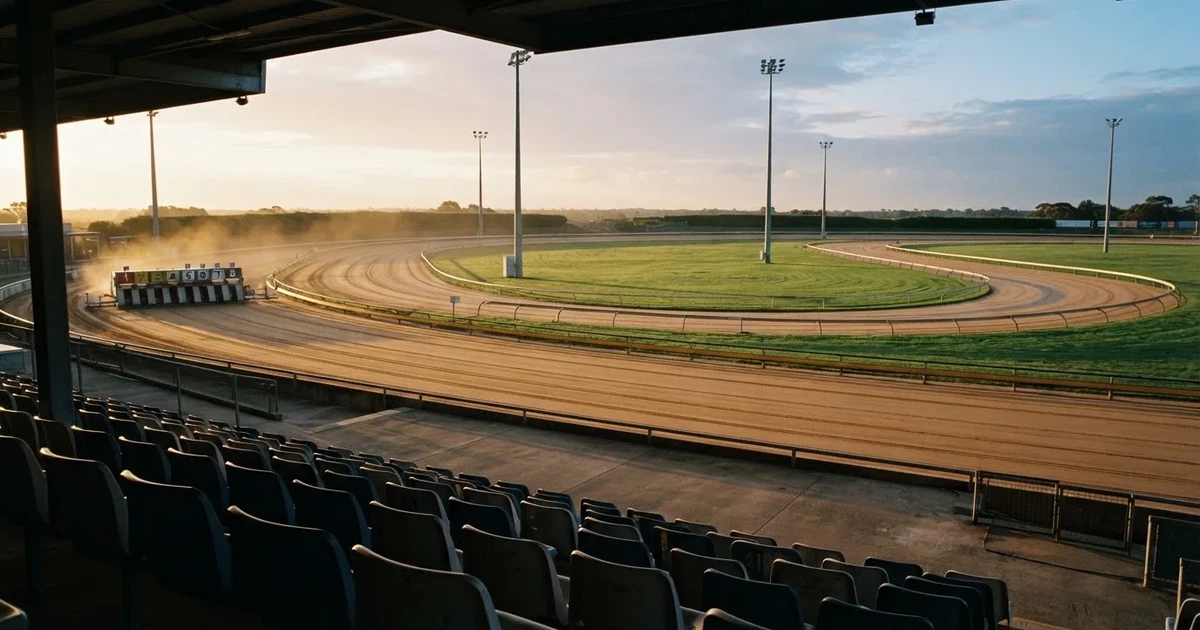
Greyhound racing in Great Britain is regulated by the Greyhound Board of Great Britain (GBGB), which lists 18 licensed stadia. The sport is small in cultural footprint compared to horse racing, but it is year-round, the meetings are frequent, and the fields are large enough to make a book interesting. Races are run over a mechanically operated artificial lure on a rail ahead of the dogs, and bookmaker betting is the norm at the track as well as online. Off-course pool betting on dog racing is a separate licence category under the Gambling Act 2005, and starting prices, the odds on a runner in the on-course fixed-odds market when the race begins, apply to greyhound racing in the same way they apply to horse racing.
The legal position of greyhound betting in New Zealand is moving in the opposite direction. Winston Peters announced on 10 December 2024 that greyhound racing in New Zealand would be banned and phased out by 2026. The Racing Industry (Closure of Greyhound Racing Industry) Amendment Act 2026, passed on 2 April 2026, sets the phase-out for 1 August 2026. Greyhound Racing New Zealand had organised seven affiliated clubs before the ban: Auckland, Waikato, Whanganui, Palmerston North, Canterbury, Otago and Southland. For a GB punter the change is a footnote rather than a market event, but it does mean the international supply of greyhound fixtures, and any future NZ bookmakers serving GB customers, is shrinking on a known timeline.
Legality, the GB licence and what it actually gives a customer
A bookmaker serving customers in Great Britain needs a Gambling Commission licence wherever it is based, under sections 33 and 36 of the Gambling Act 2005 as amended by the Gambling (Licensing and Advertising) Act 2014. A Curaçao, Maltese or Gibraltar licence is not a substitute. The Commission’s public register can be searched by business name, trading name, domain or account number, and is the whole test of who holds a licence. There is no statutory list of permitted sports or markets: an operator holds a licence for a category, and offers markets under its own rules and the Licence Conditions and Codes of Practice. In-play betting is offered by GB bookmakers under their licence conditions, but the controls are the operator’s, not the statute’s, and the word “unrestricted” is never the right way to describe what the law says.
Three things flow from the licence that a customer feels directly. The first is GAMSTOP, the national multi-operator online self-exclusion scheme and a mandatory licence condition for online operators since 31 March 2020. The second is the credit-card ban: since 14 April 2020, no credit card, and no credit-card-funded payment through an e-wallet, may be used for gambling in Great Britain. The third is identity verification before the first deposit, in force since 7 May 2019: name, address and date of birth must be checked before a customer can deposit or gamble, including with a free bet or bonus. The first deposit is therefore never anonymous at a licensed site, and source-of-funds questions at higher spend are normal under the money-laundering rules. Minimum age is 18.
The Commission’s public register is the document a customer checks before opening an account. A licence number on a footer is not proof; the register entry under the same number is. The brands in the table at the top of this page are all on the register, the licence numbers quoted are the ones the register returns, and the licence holders named are the legal entities the Commission has licensed. Several retail brands can run under one licensee, and the table names the holder rather than the trading name to keep the record straight.
Responsible gambling, deposits and what the checks cost
A financial vulnerability check (LCCP condition 3.4.4, in force since 30 August 2024) applies to licensed remote betting when a customer’s deposits minus withdrawals exceed £150 in a rolling 30 days, and the threshold has applied since 28 February 2025. It is a public-record check (bankruptcy, county court judgments and the like), not an income check and not a credit reference check. Financial risk assessments, the “affordability checks” of the press, are announced in a staged plan and have no start date. Deposit limits are an operator requirement under RTS 12; the first changes have applied since 31 October 2025, and a second phase was postponed to 30 September 2026. There is no state-set deposit or loss ceiling for betting: limits are the customer’s choice, set through the operator’s safer-gambling page. GAMSTOP self-exclusion runs for six months, one year, five years, or five years with auto-renewal, and after the minimum period the exclusion stays in place for a further seven years unless the customer asks GAMSTOP to remove it.
Help is independent of the licence. GamCare runs the National Gambling Helpline; GambleAware funds treatment and research; the NHS runs gambling clinics; Gamblers Anonymous runs peer support. The names recur on every licensed operator’s safer-gambling page, because the Commission requires the links.
Bonuses and free bets on greyhound markets
Two promotion rules in force since 19 January 2026 shape what an offer can look like. Wagering requirements on bonuses are capped at 10x: a £10 bonus at 50x would have needed £500 of bets, and under the cap no more than £100. Mixed-product promotions, an offer that requires gambling on two or more product types such as betting, casino, bingo and lottery, are banned. The cap applies to bonuses with a wagering condition. Whether it applies to free bets with no wagering condition, and any cap on the money value of a bonus, were not established in the public material.
A free bet is not a refund in cash. When a free bet wins, the stake is usually not returned with the winnings: a £10 free bet at 4.00 pays out £30, not £40. A “risk-free” bet that returns the stake as a free bet on a loss is not a refund in money either. A price boost pays extra on a single price, an accumulator insurance refunds a stake as free bets or bonus money when one leg lets down a multi, and a cashback returns a share of net losses over a period, usually as bonus money with its own wagering. Each type is its own animal, and the page names them the way the operator’s own terms name them.
Coral’s sports welcome is a worked example. A new GB customer opts in, deposits and places a sports bet of £20 or more at minimum odds of 2.0 (1/1), and receives £40 in free bets within 7 days. The free bets expire 7 days after issue. Bet Ahoy’s welcome is “Bet £10 & Get £10 in Free Bets”, a £5 sports bet and a £5 acca. Fitzwilliam Sports, a Dublin bookmaker with capped membership, runs a “High Stakes Welcome” subject to compliance criteria, and instant deposits, fast withdrawals, timeouts and deposit limits are part of its standard account tooling. Swifty Sports offers Best Odds Guaranteed, Cash Out and daily price boosts, with Bet Builder listed as coming soon. The licence and the offer are separate documents: the licence lets the bookmaker take the bet, the offer is the marketing on top.
The arithmetic of any offer is the wagering factor on the bonus base. A £10 bonus with a 5x wagering factor means £50 of qualifying bets, and a £10 bonus with a 10x wagering factor means £100. The number of bets is turnover divided by stake, and the expected cost of clearing the offer is turnover multiplied by the margin of the market the bets are placed on. On a greyhound race with a 25% margin the cost of clearing a £10 bonus at 10x is £100 × 0.25 = £25 in expected loss, before the £10 bonus is ever paid out. The bonus is only worth taking if its face value exceeds the expected cost of clearing it, and the wagering factor, the minimum odds, the deadline and the market margin are the four numbers that decide which side of the line a given offer sits on.
Apps, mobile and the in-play screen
A greyhound meeting throws up a card every few minutes, which is why mobile is the natural surface for the sport. The Fitzdares app offers cash out, accumulators, antepost markets and in-play live odds on its published sports menu. The Geoff Banks app, published by GB Sports advisors Ltd, provides live in-play prices and ante-post prices on future events. The Paddy Power Sports Betting app covers horse racing among a long menu of sports, with greyhound racing falling under the racing product. London Bet’s app combines sports betting on horse racing and greyhounds among a wider list with Pragmatic Play casino slots and live in-play. The Lottoland UK app combines casino, lottery betting, sports betting and scratchcards and states it is licensed by the Gambling Commission for GB customers.
Bet Builder is the mechanism that lets a customer combine markets from one event into a single bet, and bet365’s Bet Builder+, available pre-match and in-play, is the most visible example. Super Boosts, Winnings Boosts on Bet Builders and selected singles, and daily Bet Boosts sit alongside it. Greyhound meetings are not always a Bet Builder product: most bookmakers offer win and place markets, forecast and tricast bets, and a few exotic markets, but the same-game multi that works on a football match needs at least two unrelated greyhound markets on the same race, and the operators that support that are a small share of the licensed set. The bet365 app is described as the most downloaded sports betting app in the UK, and is the official global betting partner of the UEFA Champions League. That partnership does not transfer to greyhound racing, but the in-play product on the app is one of the references the rest of the market is measured against.
Live betting, cash out and the in-running price
A greyhound race lasts thirty seconds and the in-play market lasts longer than the race itself. The trap opens, the price moves on the favourite in the first ten metres, the price moves again at the first bend, and the price collapses for anything that gets crowded off at the third bend. The market on the screen is the bookmaker’s live book, not the SP, and the margin on the live book is wider than the margin on the pre-off market because the bookmaker has less time to balance the book.
Swifty Sports lists live streaming and in-play betting among its features, with Cash Out on horse racing and football. Geoff Banks’ app offers live in-play prices alongside ante-post prices. Midnite’s site shows in-play events, an acca builder, popular accas and price boosts with maximum-stake limits. Cash out is a feature, not a market: it lets a customer close a bet before the race finishes, at a price the bookmaker sets in real time, and the cash-out price is always worse than the true value of the bet at that moment because the bookmaker is buying the position back at a discount. The longer the race, the longer the customer has to decide, and the wider the cash-out spread the bookmaker applies.
Predictions, systems and what a tip actually is
Greyhound racing has the same problem as every other sport: the past is knowable, the future is not. A “system” is a set of rules that turns form data into a bet, and a tip is a tipster’s view of which dog to back. Neither is a forecast, because the only forecast with a known hit rate is one whose sample size is large enough to be meaningful, and no tipster publishes the underlying data. Matched betting on greyhound races is the practice of using a free bet or bonus at a bookmaker and laying the same selection at an exchange to lock in a return, and it is the only “system” that produces a known mathematical profit before the race, because the profit comes from the offer rather than from the race. The wagering cap, the minimum odds and the deadline on the offer are the numbers that decide whether the matched-bet arithmetic closes.
A punter who works from form rather than offers is paying the margin on every bet, and the margin is the only certain cost. Reading the card, watching the trials, noting the trainer and the going, and tracking the SP versus the morning price are the things a form student does. None of them removes the margin, and the only figure a form student can quote with confidence is the slice the bookmaker is keeping from the field. A tip is information filtered through a tipster’s incentives, and a tipster whose income comes from affiliate revenue is recommending the bookmaker, not the dog.
Bet types, the bet calculator and how a multi is built
The bet types below are the ones a GB bookmaker is most likely to offer on a greyhound meeting. The bet calculator is a tool that applies the stake and the odds to the structure the customer has chosen, and it is the same maths the bookmaker runs on its own book.
A single is a bet on one selection to win. A £10 single at 4.00 returns £40 if the dog wins. An each-way single is two bets of equal money, one for the win and one for a place, with place terms set by the operator. A double is two selections, both must win, the odds multiply. A treble is three selections, all must win, the odds multiply again. An accumulator (or “acca”) is four or more selections, all must win, the odds multiply across the full chain. A Lucky 15 is 15 bets covering four selections in singles, doubles, trebles and a four-fold accumulator; a Yankee is 11 bets across four selections without the singles; a Trixie is 4 bets across three selections; a Patent is 7 bets across three selections with the singles; a Heinz is 57 bets across six selections; a Goliath is 247 bets across eight selections. The total stake is the unit stake multiplied by the number of bets, and the customer sets the unit stake at the betting slip. The cost of a Lucky 15 at £1 is £15, and the cost of a Goliath at £1 is £247.
A forecast picks the first two dogs in the right order. A tricast picks the first three in the right order. A reverse forecast picks the first two in either order, and costs double the forecast. The odds on forecasts and tricasts are set by the bookmaker and are computed from the win odds of the individual dogs, with the bookmaker’s margin applied. Ante-post bets are placed before the final declaration stage, when non-runner conditions apply and Rule 4 deductions (a bookmaker rule) can reduce the return on a winner if a rival is withdrawn. Spread betting is a different product altogether: the customer buys or sells a “spread” on a number (the winning time, the winning margin, the number of finishers in a race) and the return is the difference between the spread and the actual outcome, multiplied by the stake. Spreadex is regulated by the FCA for financial spread betting and by the Gambling Commission for fixed-odds betting, and states that spread betting losses can exceed the deposit.
Where greyhound racing is bet on: the sports, the meetings and the season
Greyhound racing in Great Britain is run under the GBGB across 18 licensed stadia, and the meetings run almost every day of the year, with a denser fixture list on evenings and weekends. The biggest events are the English Greyhound Derby, the Scottish Greyhound Derby and the Irish Greyhound Derby; the English and Scottish Derbies are the GB-licensed bookmakers’ headline ante-post markets, and betting offers on the English and Scottish Derbies are a recurring fixture of the spring and summer. The sport’s season is the calendar year, and a reader comparing bookmakers in mid-winter is comparing a different set of meetings than a reader comparing in late summer.
A bookmaker’s greyhound offering is not always visible from its homepage. Coral, Paddy Power, Fitzdares and London Bet name horse racing as part of their main menu; Betmaster’s app does not list greyhound racing among its published sports. Bet Ahoy’s greyhound markets were not confirmed from the operator’s own page, so the welcome offer is the part of the brand a reader can rely on and the greyhound depth is the part to check before staking. The honest move is to open the operator’s racing or sportsbook page, find the greyhound tab, and read the meeting list before the bet is placed, because the meeting the reader is interested in is the test the homepage does not run.
The numbers behind the price
A few figures anchor the rest of the page. The Greyhound Board of Great Britain lists 18 licensed stadia. Greyhound Racing New Zealand had seven affiliated clubs before the closure of the sport: Auckland, Waikato, Whanganui, Palmerston North, Canterbury, Otago and Southland. The Racing Industry (Closure of Greyhound Racing Industry) Amendment Act 2026, passed on 2 April 2026, sets the phase-out for 1 August 2026. The wagering cap on bonuses, since 19 January 2026, is 10x. The financial vulnerability check, in force since 30 August 2024 and applied to deposits over £150 in a rolling 30 days from 28 February 2025, is a public-record check rather than a credit check. The General Betting Duty, the operator’s tax on gross profits, is currently 15%, and a new remote betting rate of 25% applies from 1 April 2027 within it, with horse racing, self-service betting terminal bets, pool betting and in-person betting staying at 15%.
The return on a winning bet is stake multiplied by odds, with profit as the difference. A £10 bet at 4.00 returns £40 (£30 profit). A £20 each-way at 6.00 in a six-dog race costs £40 in stake and returns the win leg plus the place leg. A Lucky 15 at £1 (a £15 total stake) returns something even when only one leg wins, and pays out the full multiple if all four win. The margin on a 1.90 / 1.90 two-way market is about 5.26%, and the margin on a six-trap greyhound race is the field’s implied chances summed, minus 100%. The expected cost of clearing a £10 bonus at 10x wagering, placed on greyhound markets at a 25% margin, is £25. The bookmaker keeps the margin, the customer pays it on every bet, and the offer is only worth taking if its face value exceeds the expected cost of clearing it.
Tax, the player’s position and the operator’s position
A GB punter pays no tax on betting winnings. A professional gambler is a different question for HMRC, and the right answer there is to ask an adviser. General Betting Duty is the operator’s tax on gross profits, currently 15%, with a new 25% remote rate applying from 1 April 2027 within the duty. Until that date the remote rate stays at 15%. Spread betting has its own rates: 3% for financial, 10% for other. The Commission’s statutory levy is a separate charge, not a tax. Whether the operator passes duty on through the odds is not established in the public material, and the page never states that the player is charged duty.
The ten bookmakers, reviewed
The reviews below are editorial. Each one closes on the thing the block above it actually established, not on a generic verdict.
Fitzdares
Fitzdares runs on Gambling Commission licence 000400-R-103839-030, with Fitzdares Limited as the holder. The app carries cash out, accumulators, Lucky 15s, antepost markets and in-play live odds across horse racing, football, tennis, rugby, cricket, golf and American football. Greyhound racing sits within the racing menu, and the antepost product means the Derby markets open months in advance. The premium positioning shows in the app’s design and the in-play depth; it shows less in the welcome offer, which is thinner than the big high-street names. For a punter who wants a serious racing book and is happy to pay for the in-play product, this is the cleaner choice; for a punter chasing a sign-up bonus, the licence is the same and the price is not.
Geoff Banks
Geoff Banks runs on licence 054095-R-330366-010, with GB Sports Advisors Limited as the holder. The app is published by GB Sports Advisors Ltd and offers live in-play prices and ante-post prices on future events. The product is a focused racing and sports book rather than a casino-led site, which keeps the menu narrow and the racing depth meaningful. The ante-post offering is the part that matters for the English and Scottish Derbies, because ante-post prices move on trial reports and the bookmaker’s policy on non-runners is the spec to read before staking. For a form-focused punter seeking a racing-first experience, this is the logical choice.
Bar One Racing
Bar One Racing runs on licence 056516-R-332750-007, with Bar-One Racing Limited as the holder. The brand has rebranded as BAR 1 Betting and is an Irish independent bookmaker with shops across Ireland and racing sponsorships at Dundalk, Fairyhouse, Navan, The Curragh, Curraheen Park and Cork. The UK-facing app carries the GB-licensed product, and the Irish racing sponsorships show in the depth of the horse racing offering. Greyhound racing sits within the racing product, and a GB punter is reading a brand that knows its racing because it runs racing. This platform is built for the user who prefers an independent bookmaker over the larger high-street chains.
Bet Ahoy
Bet Ahoy runs on licence 100094-R-341742-003, with Bet Ahoy Ltd as the holder. The welcome is “Bet £10 & Get £10 in Free Bets”, split between a £5 sports bet and a £5 acca. The offer is straightforward and the wagering terms are the part to read. The brand’s greyhound coverage is not confirmed from the public material, which is a real gap: a punter who opens the account for the welcome and finds no greyhound product is the failure mode the headline does not protect against. The right reader is the punter who checks the racing menu before staking and is happy with what they find. The page does not assert greyhound coverage the operator’s own page does not confirm.
Fitzwilliam Sports
Fitzwilliam Sports runs on licence 048760-R-335434-009, with SBKI Limited as the holder. The brand describes itself as a Dublin bookmaker with capped membership, and its welcome is a “High Stakes Welcome” subject to compliance criteria. The account tooling includes instant deposits, fast withdrawals, timeouts and deposit limits, and the safer-gambling page links to GambleAware, GamStop and Gamblers Anonymous. The capped-membership model means the brand is not open to every applicant; the “High Stakes Welcome” tells the reader this is for the customer the operator wants, not the other way around. The right reader is the high-stakes punter who has been approved and is using the racing product; for the rest, the licence is the floor and the membership is the ceiling.
Paddy Power
Paddy Power runs on licence 039439-R-319330-013, with PPB Counterparty Services Limited as the holder. The Paddy Power Sports Betting app covers football, horse racing, boxing, rugby, tennis, golf, darts, snooker and F1. Greyhound racing falls under the racing product, and the brand’s pricing on horse racing is the benchmark a lot of GB punters compare against. It remains a destination for the bettor seeking a full-service sports book with deep racing markets and high-profile marketing.
Coral
Coral runs on licence 054743-R-330863-014, with LC International Limited as the holder. The sports welcome is “Get £40 in Free Bets when you bet £20”, at minimum odds of 2.0 (1/1), with the free bets issued within 7 days and expiring 7 days after issue, for new GB customers who opt in. Coral is a high-street name with a deep racing menu and a long history of in-play pricing. The free bet is the marketing on top, and the racing product underneath is the part a punter compares to Paddy Power and bet365. The right reader is the GB punter who wants the high-street depth and is comfortable with a 7-day expiry on the free bet.
London Bet
London Bet runs on licence 066162-R-340278-004, with Thistle Bet Limited as the holder. The app combines sports betting on football, tennis, horse racing, greyhounds, darts, golf, cricket, NFL, NBA, MLB and snooker with Pragmatic Play casino slots and live in-play. The greyhound naming is explicit on the app store listing, which is the part a punter comparing products will pick up on. The mixed product means the racing product sits alongside casino slots, and the right reader is the punter who wants both in one app. The 7-day expiry on free bets is the same shape as Coral’s, and the wagering terms are the part to check on the bonus.
Betmaster
Betmaster runs on licence 065699-R-339929-002, with BM Solutions GB Ltd as the holder. The app covers football, cricket, horse racing, NFL and eSports (League of Legends, Dota 2). Greyhound racing is not listed in the app’s published sports menu, which is a real gap on a page about greyhound betting. A punter looking for greyhound markets at Betmaster is the failure mode the brand’s own page does not protect against. Users primarily interested in football, cricket, horse racing, NFL or eSports will find their markets here, but it is not a home for the greyhound punter.
Swifty Sports
Swifty Sports runs on licence 058957-R-334734-006, with Swifty Global (UK) Ltd as the holder. The brand offers Best Odds Guaranteed, Cash Out on horse racing and football, daily price boosts, live streaming and in-play betting, with Bet Builder listed as coming soon. The BOG offering is the part that matters on horse and greyhound racing, because it pays the bigger of the morning price and the SP, and a punter who takes the morning price and then watches the SP drift is paid out at the morning price. The right reader is the punter who values BOG and the in-play product, and the Bet Builder is a 2026 watch-point rather than a current feature.
The licensed brand and the offshore brand
A GB licence is compulsory at the point of consumption. Providing gambling facilities in Great Britain without the licence the Act requires is an offence under section 33 of the Gambling Act 2005. There is no state-set deposit or loss ceiling for betting, no state list of permitted payment methods, and no rule for or against cryptocurrency deposits at licensed operators; payments are described from each operator’s own terms. A brand whose domain ends in .com rather than .co.uk may still be licensed: the domain proves nothing, the register proves everything.
An offshore brand without a GB licence does not take part in GAMSTOP, is not subject to the Commission’s customer-protection duties, has no approved dispute-resolution body for GB customers, and is not bound by the 10x bonus cap or the £150 vulnerability check. A customer who bets on an unlicensed site has no British consumer redress if funds are withheld, and the page does not write that the site is “legal to use”. Enforcement is disruption rather than blocking: cease-and-desist notices, search-engine referrals, work with registrars, hosts and payment providers, and the Commission has been given, or is about to receive, court-order DNS blocking powers. The honest framing is that licensed means checks, limits, GAMSTOP, the bonus cap and verification before the first bet, and unlicensed means none of those protections and the risk of losing the funds in the account.
Frequently asked questions on greyhound betting odds
How do you bet on greyhound racing?
Pick a licensed GB bookmaker, open an account, complete the verification check (name, address and date of birth), deposit by debit card or bank transfer (credit cards are banned for gambling in Great Britain), and find the greyhound tab on the racing or sportsbook page. Choose a race, a trap, a stake and a bet type — single, each-way, forecast, tricast or a Lucky 15 or Yankee if combining selections — confirm the odds and place the bet. The winnings land in the account when the race is settled.
How do you bet on greyhound dogs?
The mechanism is the same as betting on any other fixed-odds sport. Decimal odds convert stake into return directly, fractional odds show profit per unit stake, and starting prices apply to greyhound races in the same way they apply to horse races. A forecast picks the first two dogs in order, a tricast picks the first three in order, and ante-post bets are placed before the final declaration, when non-runner rules and Rule 4 deductions can apply.
How can a bettor actually win at greyhound betting?
The honest answer is that no system removes the bookmaker’s margin, and the margin is the only certain cost on every bet. Matched betting is the one route that produces a known mathematical profit, because the profit comes from the free bet or bonus rather than from the race. Form study, watching trials, tracking the trainer and the going, and noting the SP versus the morning price are useful for picking dogs, but the slice the bookmaker keeps from the field is the figure a punter cannot avoid. The expected cost of clearing a £10 bonus at 10x wagering, placed on greyhound markets at a 25% margin, is £25 in expected loss.
How is a Gambling Commission licence checked?
Go to the Commission’s public register, search by business name, trading name, domain or account number, and confirm that the licence is in force, that the licence category covers the product the customer wants to bet on, and that the licence holder is the legal entity behind the brand. A licence number on a footer is not proof; the register entry under that number is. Several retail brands can run under one licensee, and the register names the holder rather than the trading name.
How is the return on a bet worked out from the stake and the odds?
In decimal odds, return equals stake multiplied by odds, and profit equals stake multiplied by odds minus 1. A £10 bet at 4.00 returns £40 and pays £30 in profit. A combination bet multiplies the odds of the legs into one price: a double on two dogs at 3.00 and 4.00 is priced at 12.00. In fractional odds, profit equals stake multiplied by the fraction, so £10 at 5/1 returns £60 in total. Each-way doubles the stake because two bets of equal money are placed.
What is the bookmaker’s margin and how does it show in the odds?
The margin is the slice the bookmaker keeps of every unit bet on a market, and it shows up in the gap between the implied probabilities of all the outcomes and 100%. A two-way market at 1.90 and 1.90 (9/10 each side) gives implied chances of about 52.63% per side, summing to 105.26%, so the overround is 5.26% and the bookmaker’s margin is 5.0%. The wider the margin, the more the favourite’s price is inflated and the more the long-shot prices are deflated, and greyhound races with large fields carry wider margins than two-way markets because the long tail of small bets costs the bookmaker to balance.
Horse racing & greyhounds – Socceroddshub.com
Content created by the «Socceroddshub.com» team
