
Best Bet Prediction for Today: How to Read Form, Find Value and Stop Trusting Tips
 Available in US
Betting tips, free predictions and AI-picked accumulators sell the same fantasy in 2026: that somebody, somewhere, knows who is going to win. The fantasy is the product. The trade is the price, and the price is built so the house takes its share on every result. A guide that pretends otherwise sells fantasy and calls it analysis. This one tries to do the other thing: name what a “prediction” actually means, show where it comes from, and put the ten UK-facing bookmakers alongside it so a reader can place a bet with eyes open, or place none at all.
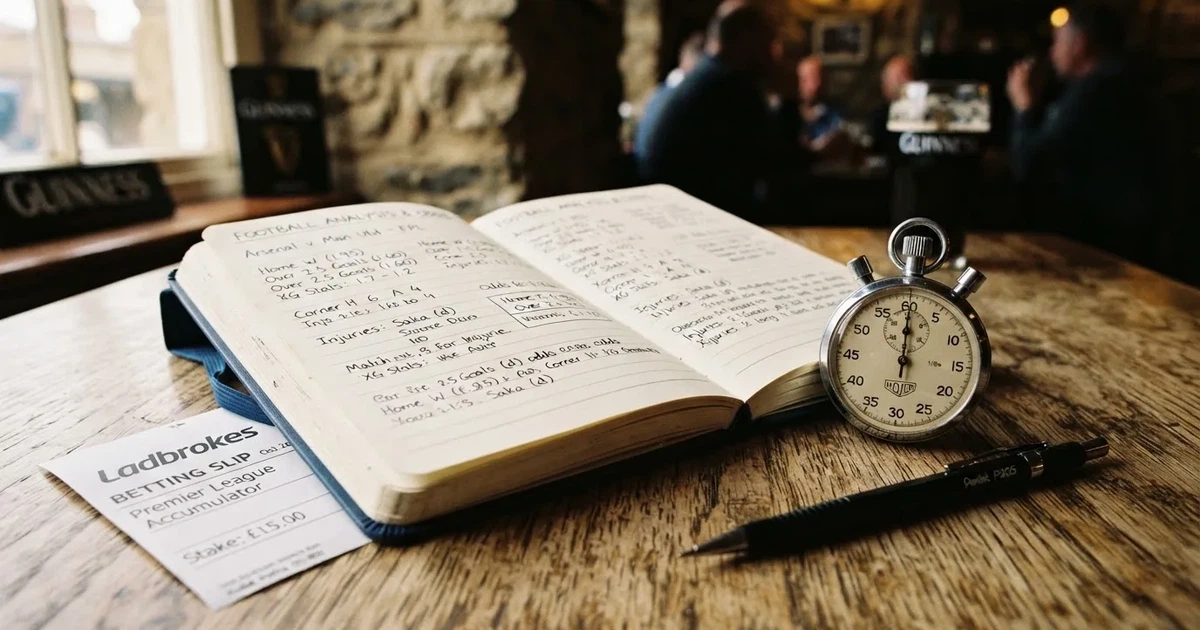
Punters who search “best bet prediction for today” usually want a tip. The honest answer first: there is no such thing as a prediction that wins reliably. There are prices, and some prices are bigger than the chance they pay for. Finding those is the only form of “prediction” that survives contact with a bookmaker’s balance sheet. The skill is the comparison, not the picking.
Data current as of October 30, 2026, checked against the UK Gambling Commission’s public register.
The ten GB-licensed bookmakers compared
A licence is the floor, not the ceiling. The ten brands below each hold a Gambling Commission remote licence for general betting on real events, and each is checked against the register rather than the marketing. Their welcome offers are described qualitatively because a code or an exact stake number does not survive a week; the *shape* of the offer, and what it costs the person taking it, is what lasts.

| Brand | Gambling Commission licence | What the operator’s own terms state on the key’s subject |
|---|---|---|
| VBet | Account 44662, held by SCGO Limited | Bet Builder, pre-match and in-play betting, live streaming and a live results calendar through its app |
| DragonBet | Account 64908, held by DragonBet Ltd | Cash out both in-play and pre-match, plus live streaming of racing |
| Star Sports | Account 9177, held by Star Racing Limited | UK racing-led sportsbook with virtual sports, casino and live casino attached |
| Sky Bet | Account 67370, held by SBG Sports Limited | Welcome offer of £30 in free bets credited as three £10 tokens after a £5 deposit and a first bet of 5p at 1/1 or greater |
| NetBet | Account 39170, held by Netbet Enterprises Limited | Daily Boosts and Profit Boosts on selected prices, a Bet Builder with dynamic odds and major-league stats |
| Paddy Power | Account 39439, held by PPB Counterparty Services Limited | Bet Builder+, Popular Bet Builders, Super Sub replacing a substituted player, expanded Win More markets and player stats |
| Fitzwilliam Sports | Account 48760, held by SBKI Limited | Phone and live chat support, office open 09:00 to 21:00 every day, messenger replies within around 90 seconds |
| BetTom | Account 64959, held by Bet Tom Limited | Sports welcome offer of 50% back as a free bet of up to £50, with a matching 50% back up to £50 in free slot funds for casino |
| Spreadex | Account 8835, held by Spreadex Limited | FCA-regulated for spread betting and UKGC-regulated for fixed odds; spread losses can exceed deposit; new-customer fixed-odds offer is £60 in free bets for a £10 qualifying bet, usable across both products within 28 days |
| QuinnBet | Account 61011, held by QuinnBet (Gibraltar) Limited | Free bets valid for 7 days from credit, on any market at odds of 1/2 or greater, with maximum odds of 50/1 and straight accumulators allowed |
The rest of the column tells a reader how the brands actually behave. VBet and Paddy Power load up on bet-building tools. Sky Bet, BetTom and Spreadex trade in welcome offers heavy on free bets. Fitzwilliam Sports runs a phone-first service for punters who would rather talk to a person. Spreadex is the only fixed-odds and spread-betting combination in the table, and the only one whose regulator is split between the FCA and the Commission. QuinnBet’s 1/2 minimum price on free bets is the friendliest in the group. Star Sports keeps its racing focus, with virtual sports and casino beside it.
A licence number proves the brand is regulated. It says nothing about whether the welcome offer is generous, the payouts are quick or the in-play markets are deep — those are the questions a reader has to answer with their own bet.
What a “prediction for today” actually is
The phrase means different things on different sites. A free tip sheet is a list of teams to back, often accompanied by confidence ratings on a five-star scale. A “value bet” is something else: a price that, once the bookmaker’s margin is removed, is higher than the true chance of the outcome. The two don’t even use the same mental maths. Tip sheets sell certainty; value bettors sell arithmetic.

A real prediction is built from inputs that age badly. Team form, head-to-head records and the league table tell most of the story for domestic football, but they don’t tell it cleanly because they ignore injuries, fixture congestion, weather and the part of the table that doesn’t show up in points per game: xG, expected goals, which is the quality of chances created and conceded rather than the finishing. A line-up confirmed an hour before kick-off is information; the same line-up rumoured the night before is noise. A bookmaker that has priced up the same match with sharper models than yours has already used most of what is public, and your edge, if any, has to come from what their model missed — not from the same data run through a slower calculator.
This is the part search engines don’t surface because nobody advertises it. The shape of a tip is always a name and a price; what makes one tip sharper than another is a footnote on what the tipster has actually noticed. Without that footnote, the tip is a guess, and the bookmaker is paying the sharper version already.
The mechanics of an odds price
Every decimal price hides a margin. Two-outcome markets are the easiest place to see it. Suppose a bookmaker offers 1.90 on each side of an event. The “payout share” — the proportion of every pound bet that the book would return across both outcomes if both paid out — is:
> payout share = 1 / (1/odds₁ + 1/odds₂ + … + 1/oddsₙ) over all outcomes of one market; margin = 1 − payout share.
At 1.90 and 1.90, the share works out to 1 / (1/1.90 + 1/1.90) = 1 / (0.5263 + 0.5263) = 1 / 1.0526, or about 95.0%. The margin is the rest — roughly 5.0% kept on every unit bet on that market. A balanced two-way book at 1.95 / 1.95 would yield a margin of about 2.5%; an aggressive book at 2.00 / 2.00 would shave that to roughly zero. The number a punter reads as “the price” is the number after the margin has been taken.
That’s the working band in the UK market for two-way markets: about 2.5% to 7% margin on mainstream football, horse racing and tennis prices, with sharper books at the low end and recreational books at the high end. Margin in this band is what’s being paid for the convenience of betting in pounds with a UK debit card and a UK app. A bookmaker selling 1.90 / 1.90 on a Premier League match is not cheating; it is in the middle of the market for that sport. What readers should notice is how rarely the band shifts outside 5%, because outside it the offer stops being profitable enough to advertise.
Why even a good model loses more than half its bets
A value bet on a 2.00 shot needs to win more than 50% of the time to be profitable, before commission and before the deadbeats that populate a typical weekend’s slip. On a 5.00 outsider the model has to be right only 20% of the time, but the bookmaker has sharper pricing on the longshots than on the favourites. The entire business of the value punter is being right more often, in situations where being right is harder, than the bookmaker’s own traders are. That’s why “winning tipsters” come and go. The bookmakers just keep pricing up tomorrow’s matches.
The conclusion is uncomfortable for any page about “best predictions”. There is no shortcut. Form, statistics, line-ups and the published odds together produce a price, and the bet is good only if the price exceeds the chance. Searching for somebody who has done that arithmetic for you is reasonable; treating their output as a tip instead of an estimate is where the money goes.
Bankroll discipline, stake sizing and the staking plan
The part of betting literature that almost never runs in the search snippets: a bankroll is the amount you have set aside to lose. A “unit” is one per cent of that bankroll, normally. A stake is one to five units, depending on how confident the price-against-true-chance calculation comes out. The same tip that would merit a 3-unit stake at confidence 60% is a 1-unit stake at confidence 55%, and zero units at confidence 50%, because at 50% with a 2.00 price the margin eats the edge before any commission does.
This is what staking plans like Kelly, fractional Kelly and level stakes do — they translate the model’s confidence into the size of the bet. A 50%-confidence tip at 2.00 isn’t a no-bet; it’s an automated zero on most reasonable staking plans, because the bet, taken often, breaks even only if the price is at least 2.10 on a balanced two-way market at 95% payout share. A 1-unit stake at 50% confidence and 2.00 over 200 bets of similar quality doesn’t return more than the starting bankroll, even without commission. That is the constraint. Outside of it, no staking plan rescues the bettor.
The staking plan is not a system that wins. It is a sizing convention that keeps the bankroll alive between losses, which is the only thing it can do.
Bankroll
Bankroll is set first. Most professional or semi-professional bettors run 1% of bankroll as a unit, 1–5 units per bet depending on model confidence, and never chase. Chasing means increasing stake after losses in the hope of recovering; on a level-odds game against a margined book it is a guaranteed path to ruin, and the only question is how long it takes.
A reader wanting to start with £200 should set a 200-unit bankroll with £1 stakes, or a 100-unit bankroll with £2 stakes. Anything tighter and a six-bet losing streak — unremarkable in any week — wipes the bank.
Forecasting
A “forecast” in horse-racing terms is a bet picking the first two in order, separate from an each-way stake. In the broader sense, a forecast is whatever model produces an estimated chance for each outcome. The model is what determines the bet. The bet does not determine the model.
Analytic
“Analytic” tools range from spreadsheets of form data, to subscription stats services, to free pages of expected-goals tables. None of them “predicts” outcomes. They feed the model that prices the bet. Treating the output as a prediction without a model is the marketing version of the same thing.
What a “value bet” looks like in the wild
Suppose the published odds on a tennis player to win are 2.20. Suppose the bettor’s model, after injury news and recent form, gives the player a 50% chance to win. The fair price would be 2.00. Anything above 2.00 is “value”, because at 2.20 the bet returns £2.20 for every £1 staked, while the model says the bet wins half the time. The expected return on the £1 stake is £2.20 × 0.50 = £1.10, or 10p above the stake. Over many such bets, 10p of profit per pound is significant; on a single weekend it’s noise.
The example also shows why a price boost or “enhanced odds” is a separate question, not a tip. Sky Bet’s free bets, Paddy Power’s Super Sub, BetVictor’s daily boosts — each affects the price the customer sees, not the chance the outcome happens. A boost of 5.00 to 7.00 is a £2 uplift on a winning £1 bet, and the maths of value versus the model doesn’t change because of it. What changes is whether to take the bet at all, and at what size. The skill is in the decision before, not the price after.
“Sure bets”, fixed matches and “locks”
A “sure bet” in any tipster’s marketing is a contradiction in terms. If the outcome were sure, the bookmaker wouldn’t price it. Some tipsters use “lock” to mean a strong favourite, which on a Premier League Saturday usually means a price of about 1.30 — the kind of odds on which, after the margin is stripped, the model gives the favourite perhaps a 73% chance. That bet is not a lock. It is a small edge, sized accordingly, and bankroll discipline says three units at the outside. Treat it as more than that and the long-term maths doesn’t care. The match-fix problem has its own obvious diagnosis: a “fix” advertised on a website is a scam, almost without exception. The Commission has prosecuted operators and individuals for facilitating fixed matches; the tip sheet offering a “fixed match today” is a separate criminal trade.
Gambling law in Great Britain: who is licensed, who is offshore, and what changes
The Gambling Act 2005, as amended by the Gambling (Licensing and Advertising) Act 2014, makes a Commission licence compulsory for any operator whose remote facilities are used in Great Britain, regardless of where the company is based. A Curaçao, Maltese or Gibraltar licence is not a substitute. The Commission’s public register is the whole test of who holds one.
This section is the legal frame around the table above. It is not a marketing comparison.
Northern Ireland, the single market, and the licence test
Northern Ireland is outside the 2005 Act and runs older betting law, so a “Great Britain” or “GB” licence is the right description. A reader in Belfast who opens an account with a GB-licensed brand is betting under the GB rules; the same reader who opens with an unlicensed offshore brand is in the same legal position as a reader in Edinburgh or Cardiff using the same brand. The “GB” matters because the offshore rule applies differently in Northern Ireland in some edge cases, but for everyday betting on a major football match the difference is tiny.
The credit-card ban and the identity check
Credit cards have been banned for gambling in Great Britain since 14 April 2020. Debit cards and most bank-based payments are not covered by the ban. The ban extends to credit-card-funded payments through an e-wallet, which is the more useful rule to remember: the regulator looks at the funding source, not the destination.
Since 7 May 2019, GB-licensed remote operators must verify name, address and date of birth before a customer can deposit or gamble, including on a free bet or a bonus. There is no anonymous play at a licensed site, which is, depending on the reader, either an irritation or the price of a regulated market.
In-play, sports, novelty and esports
There is no statutory list of permitted bets or markets in the 2005 Act. A bookmaker holds a licence for a category and offers markets under its own rules and the LCCP. In-play betting is offered by every GB-licensed brand on the table. Esports are treated like any other event. Bets on politics, TV shows and novelty markets are common. A cap on what an individual punter can stake in-play is an operator decision, not a rule.
Financial vulnerability and the affordability checks
A financial vulnerability check applies to licensed remote betting when a customer’s deposits minus withdrawals exceed £150 in a rolling 30-day period, in force since 28 February 2025. It is a public-record check (bankruptcy, county court judgments and the like), not an income check. The more controversial “affordability checks” — financial risk assessments that look at income and outgoings — were announced in a staged plan with no start date as of mid-2026; write them as “announced, staged, no start date”, not “in force”.
Bonuses, wagering and the marketing rules
Bonus wagering requirements have been capped at 10x since 19 January 2026, meaning a £10 bonus with a 50x requirement had to clear £500 of bets before withdrawal; under the cap, no more than £100 in turnover is needed to clear a £10 bonus. Mixed-product promotions — an offer that requires gambling on two or more product types — are banned, so a “bet on football to get free spins” style headline is no longer permitted at GB-licensed brands.
The cap is on wagering, not on the money value of a bonus, and whether it applies to free bets with no wagering condition is not established, so different brands structure different offers differently. Sky Bet’s £30 in free bets after a 5p first bet is one shape; Spreadex’s £60 in free bets for a £10 qualifying bet is another, with a 28-day window from account opening for the qualifying bet; BetTom’s 50%-back-as-a-free-bet up to £50 is the third common shape, paired with a matching casino free-funds credit. The shape of an offer is what the bettor compares, not the headline number.
Whistle-to-whistle, advertising and the front of shirts
Betting adverts have not been shown on UK television from five minutes before a live sporting event to five minutes after it before the 9pm watershed since 1 August 2019. Horse and greyhound racing are excluded because the audience is, by definition, there for the racing. The Premier League clubs’ voluntary withdrawal of gambling sponsorship from the front of matchday shirts from the 2026/27 season is voluntary, not law; sleeves and pitch-side hoardings remain.
A reader should hold two facts in mind: the volume of gambling advertising in the UK is regulated, not banned, and the affiliate link in a tipster’s article is part of the marketing that the operator is responsible for, not the affiliate.
Tax: who pays what
The player pays no tax on betting winnings in Great Britain. General Betting Duty is an operator tax on gross profits, currently 15%; from 1 April 2027 a remote betting rate of 25% applies to most online bets, with horse racing, pools, terminals and in-person bets staying at 15%. The remote rate stays at 15% until that date, and whether operators pass duty on through odds is not established. A professional gambler is a different case, and should ask HMRC or an adviser. None of this is tax advice.
Offshore: what a GB licence gets the customer
A GB-licensed customer has access to GAMSTOP for self-exclusion, the Commission’s complaints route, an approved alternative-dispute-resolution body, and the consumer redress available under UK regulation. A bonus cap of 10x applies, the £150 vulnerability check applies, and the operator’s terms are bound by UK consumer law. An offshore brand running on a Curaçao or Malta licence offers none of those protections. The Commission’s enforcement is disruption — cease-and-desist notices, search-engine referrals, registrar and payment-provider work, and court-order DNS-blocking powers — not consumer protection for the customer already on the books.
The trade is not complicated. Licensed means checks, limits, GAMSTOP and a complaints route, with the cost of identity verification before the first bet. Unlicensed means none of that and, where a brand decides to withhold funds, no British redress. Neither is “the safe choice” by default; honest framing is “the regulated choice” versus “the unregulated choice”.
Safer gambling tools and the routes to help
The page about “best bet prediction” has to mention the part that gets cut from search results. Gambling harm is real, harm shows up across income brackets, and the prediction-of-the-day format tends to encourage chasing rather than value betting.
Limits and self-exclusion as licence conditions
Every GB-licensed remote brand must offer deposit limits and a GAMSTOP self-exclusion route. Since 31 March 2020 GAMSTOP has been a mandatory licence condition for online operators; the minimum exclusion period is six months, with one year and five years as other options, and a five-year period with auto-renewal. After the minimum period the exclusion stays in place for seven more years unless the customer asks GAMSTOP to lift it. The scheme covers online sites and apps; betting shops use a separate service. Operators must offer deposit limits under the Remote Technical Standards; the first changes have applied since 31 October 2025, a second phase has been postponed to 30 September 2026, and whether it is live depends on the brand. There is no state-set deposit or loss ceiling in the UK, which means the limit is the customer’s own choice, set inside the operator’s tools.
Unibet’s safer-gambling offering is reasonably representative of a major brand: deposit limits, a Player Profile test, product restrictions and self-exclusion, with live-chat support and links to BeGambleAware, GamCare, GAMSTOP, Gambling Therapy and the BGC.
The help lines, in their own words
GamCare runs the National Gambling Helpline, 24 hours a day, every day. GambleAware funds treatment and education. The NHS runs gambling clinics in several regions, free at the point of use. Gamblers Anonymous runs peer-support meetings across the country. None of these is the Commission’s complaints line, which is for breaches of the licence.
A useful check before opening any account is the GAMSTOP register: if a self-exclusion is in place, the GB operator will refuse to open the account. This is the rule, not the exception, and it exists because exclusions without enforcement are not exclusions.
Reading a “responsible gambling” page for the wrong things
An operator’s safer-gambling page lists the tools. It is not an evaluation of how those tools are presented or enforced in the rest of the brand. A safer-gambling link in the footer is a licence requirement; a deposit limit you have to dig three menus deep for is also a licence requirement. The two together say little about whether the limits are easy to set, easy to enforce, and whether the operator’s marketing department sends promotional e-mails during a self-exclusion period, which is the kind of thing a reader has to check themselves.
Mobile apps and browser betting on the ten brands
The cluster of searches behind “best bet prediction app” overlaps with the prediction cluster, and the way a punter consumes predictions is mostly through the phone. Most of the ten brands on the table above offer an iOS app; the Android side is broadly similar in feature.
What the apps actually do
Vbet’s app publishes Bet Builder, pre-match and in-play betting, live streaming and a live calendar with results and stats. DragonBet’s app is cash-out and racing-streaming-led. Star Sports runs alongside its app a virtual sports and casino product inside the same login. Sky Bet’s app is the standard sportsbook-plus-casino shape with the addition of the £30-in-free-bets welcome offer described in its terms. NetBet offers Daily Boosts, Profit Boosts, free-bet offers, a Bet Builder with instant dynamic odds and stats for major leagues. Paddy Power’s app is the heaviest bet-building product on the table — Bet Builder+, Popular Bet Builders, Super Sub that rolls a bet over to a replacement if a selected player is substituted, expanded Win More markets and player and accumulator stats. BetTom and Spreadex sit closer to the standard sportsbook-plus-casino template. Fitzwilliam Sports is the one phone-first bookmaker on the table, with the office open 09:00 to 21:00 every day and a messenger chat that replies within around 90 seconds. QuinnBet does not need a separate app review here because its key terms were covered above.
Where the prediction sits
A bookmaker app is not a prediction engine, even when it claims to be. Paddy Power’s “Popular Bet Builders”, Sky Bet’s featured markets and BetVictor’s “Smart Stats” are curated lists of selections popular with other punters, sometimes with a price boost attached, sometimes not. The signal a punt sees in such a list is more about which way the public money is moving than about the model’s estimate of the chance. That isn’t useless — public-money bias can be priced in — but it isn’t a prediction either.
The free prediction apps that show up in app stores under names like “AI Sports Betting Predictions” or “Football Betting Tips” are a more mixed bag. The honest ones deliver a probabilistic estimate and a reasoning trace; the dishonest ones deliver a star rating and an affiliate link. The reader’s job is to tell them apart, and a single rule helps: a model that explains why it likes a bet is more useful than a model that doesn’t.
Browser, mobile site and the older bookmakers
The older bookmakers — William Hill and BetVictor run with the longest track record on this list at around 80 years for BetVictor — built their sites around a browser experience and added a mobile app later. The browser bookmaker tends to handle in-play betting with more screen real estate than the app version, and the mobile app tends to keep the most popular markets one tap from the home screen. For a punter who does most of their betting on a Saturday’s racing, the browser version is often better; for a punter betting on an in-play football match, the app wins.
Live streaming and in-play data as the value-adding layer
Live streaming and in-play data are the two features that distinguish a serious app from a token app, on this list and elsewhere. DragonBet streams racing. Vbet streams selected events. Spreadex streams via WHTV with the rule of a funded account or a bet placed in the last 24 hours, and live racing needs at least £1 on a qualifying race. The free streaming tier is horse racing through William Hill’s Betting TV for selected UK and US races and UK greyhounds. In-play data — score, possession, shots, xG, the kind of thing shown in the Bet Track and Live Golf Tracker on bet365 — turns a phone into a small trading screen. None of it predicts anything on its own. It speeds up the bettor’s own model.
Building a “bet prediction for today” that survives contact with a betting account
The work behind a tip is unglamorous. A model is built from data, calibrated against past results, and run forward on today’s matches. The output is a price for each selection, compared with the bookmaker’s price, and a bet placed when the model’s price is higher than the bookmaker’s by a margin that exceeds the transaction costs. On a typical weekend’s Premier League fixtures the model might produce four value bets out of ten games; sometimes zero; sometimes seven. The skill is in producing four rather than seven; the staking plan is what translates the four into a profit.
Inputs and their shelf lives
Form tables last a week. Last season’s head-to-head record is barely relevant in a league where half the squad has changed in the window. Injuries and suspensions in the next 24 hours are the freshest input and the one most likely to move the model’s output. Line-ups, confirmed an hour before kick-off, are the second-freshest input, and the only one the bookmaker doesn’t already have access to as well. Weather matters more in lower leagues than in the Premier League, because the betting market for the Premier League already prices weather in.
Statistics shape the long-run model: xG and xGA over the season, the kind of table that BetVictor’s Smart Stats, Paddy Power’s ACCA stats and NetBet’s stats pages display for free. The expected-goals table is not a prediction; it is a regression to the mean with the team’s actual results replaced by what the chances were worth. A team that has been scoring fewer goals than its xG is, in a long enough sample, likely to come back to its expected level. A team that has been scoring more is, on the same logic, on borrowed time. The bookmakers price the regression as well as they price the form; the edge, if any, is in pricing one or the other more accurately.
Where bookmakers win against tipsters
A bookmaker has more traders than a tipster and better data on where the public money has gone. By the time a tip sheet publishes its “lock”, the public money has moved the price by enough that the edge has shrunk, sometimes to nothing. The honest version of this trade is to take the public price, run the model before kick-off, and skip the games where the model’s price is at or below the bookmaker’s. On a Saturday, three out of ten games pass that filter. The other seven are no bets.
This explains why “best free prediction site” and “best free betting prediction site” search volumes are enormous and the conversion rate to profitable betting is small. Most readers want somebody else to do the model’s job; the trade, in turn, is the bookmaker’s certainty that somebody else can never do the model’s job better than the bookmaker can.
The accumulator and how it raises the margin
An accumulator, or “acca”, multiplies the odds of each leg into one price. A four-fold at 2.00, 2.00, 2.00, 2.00 is a 16.00 shot on paper, and a 5p punt returns 80p. The bookmaker’s margin compounds with each leg. A four-fold of 2.00, 2.00, 2.00, 2.00 at 5% margin per leg becomes a four-leg price that hides a roughly 19% margin on the accumulator itself. A punter who picks only “value” legs and multiplies them together is multiplying four small edges into one small edge with more variance, not a bigger one. That is why accumulators pay much more rarely than the headline price suggests, and why each leg the bookmaker adds is a cut of the value rather than a boost.
Insurance — “acca insurance” that returns the stake as a free bet if one leg lets the punter down — partly offsets this, because it changes the distribution of outcomes at the cost of the variance. The trade-off is real but not dramatic.
The free bet and what it is worth
A free bet is what it sounds like: a stake the bookmaker gives to the punter, with the result paid in winnings and not in the stake. A £10 free bet at 5.00 returns £40 in profit if it wins, not £50; the £10 stake is not returned. The value of a free bet, on a given market, is therefore roughly free-bet amount × (odds − 1) ÷ odds, scaled by the payout share of that market. At 5.00 on a market with a 95% payout share, a £10 free bet is worth about £7.60 on average — less than the £10 headline, more than zero. That number is what the “free” actually means, and it’s why free bets are not gifts.
Sky Bet’s welcome offer of £30 in free bets after a 5p first bet, Spreadex’s £60 in free bets for a £10 qualifying bet, and QuinnBet’s general free-bet terms (1/2 minimum odds, 7-day expiry, 50/1 maximum odds, no Trixies or Patents) sit in this same trade-off. None of them is more generous than another in any absolute sense; they differ in the qualifying stake, the qualifying price and the free-bet terms, and the reader’s value depends on which set of terms fits which bet.
Why nobody publishes their model
The honest answer: publishing a working model invites it to be copied until the edge evaporates. The less honest answer: most published models do not survive publication because they were never models. A page that lists “lock” picks without a reasoning trace is not running a model. The reasonable response is to treat named tipsters as data sources and to back-test their record over a thousand-plus bets, which most readers never do, which is part of why the market functions.
How to read the bookmaker: details that change the picture
Each of the ten brands in the table above has a betting product under the licence. The features differ. The features a punter should care about, in order of how much they affect a Saturday’s betting, are: price, in-play depth, bet-building tools, free bets and sign-up offers, cash-out rules, and finally live streaming and stats.
Price
Price is the headline variable. A 5% margin book on the Premier League is an ordinary book; a 7% margin is the recreational end; a 2.5% margin is the sharp end. A punt that picks based on a star rating alone, without checking the price, is leaving money on the table.
In-play depth
In-play depth is the number of markets available once a match has started. A typical Premier League match on a major book runs several hundred in-play markets at any moment: match result, next goal, over/under, Asian handicap, player markets, corners, cards. The brands in the table above offer the standard coverage. The depth on lower leagues varies sharply. A punter who bets primarily on the Championship should expect thinner books and bigger margins on the matches outside the televised fixtures.
Bet building
Bet Builder or Same-Game Multi is the same product under different names: a single bet that combines markets on the same match, with combined odds shown on one slip. The “instant dynamic odds” feature on NetBet is a small step beyond the basic bet builder — the odds re-price as the bettor adds or removes selections. Paddy Power’s Super Sub is a separate feature: a selected player can be replaced by another on the same team at the same stake if the original is substituted, and the price re-runs. The bettor’s trade is in knowing whether the feature is worth the extra 1–2% margin that builders typically carry.
Cash-out rules
Cash out is the bookmaker’s option to settle a bet before the outcome. A bookmaker that offers cash out on every market and locks a fair price in front of the bettor is offering a worse deal than one that restricts cash out to selected markets. DragonBet offers cash out in-play and pre-match; QuinnBet’s free-bet terms imply a different framework around in-play betting; the rest of the table varies by market. The cash-out price the bookmaker offers is not the true price of the bet; it is a price after the bookmaker’s margin has been applied twice — once on the original price, once on the closing-out price. A punt that cashes out routinely is paying that double margin.
Live streaming and stats
Live streaming needs a funded account or a recent bet at most major UK books. Spreadex’s WHTV requires a bet in the last 24 hours or a funded account; live racing needs a £1 minimum bet. Most major brands stream racing free with a funded account. Football streams are a mix of free and paid. Stats pages — Bet Track on bet365, BetFinder on BetVictor, Smart Stats on BetVictor, the major-league stats pages on NetBet and Paddy Power — turn the in-play screen from a price board into a small data terminal.
The verdict on each of the ten brands, in the order the table sits
The closing line on each block below is the page’s judgement of the brand. The specifications above it are not.
VBet
VBet offers Bet Builder, pre-match and in-play, live streaming and a stats calendar. The product is the standard shape for a GB-licensed bookmaker with a football tilt; the licence, held by SCGO Limited, places it at Commission account 44662. A punter who wants the broadest menu of football markets without leaving the in-play screen, and who is comfortable with a recreational margin, will find VBet a sensible choice. The brand that already runs a sharp-price specialist and another recreational book has no reason to switch.
DragonBet
DragonBet offers cash out in-play and pre-match and live streaming of racing, with the licence held by DragonBet Ltd under Commission account 64908. The product is racing-led; football coverage is present but not the focus. A punter whose betting is racing-led, who wants in-play cash out for a Saturday afternoon, and who values the phone and chat support channels that several smaller brands offer, is the natural fit. The international punter betting primarily on lower-league football should look elsewhere.
Star Sports
Star Sports describes itself as the UK’s leading independent bookmaker, with virtual sports, casino and live casino alongside the sportsbook, under a licence held by Star Racing Limited. The product is racing-led and independent in the sense that the parent company is racing-focused rather than part of a casino conglomerate. A punter who wants the racing-product focus and is comfortable with the narrower sports menu outside horse racing will find Star Sports a competitive option. Punters looking for the deep in-play football product and the builder tools that the larger brands offer should pick one of them.
Sky Bet
Sky Bet’s welcome offer is £30 in free bets credited as three £10 tokens after a deposit of at least £5 and a first single or each-way bet of at least 5p at odds of 1/1 or greater, with the licence held by SBG Sports Limited. The offer is the most accessible on this table: a 5p qualifying bet is a token stake; the headline is a real headline. The free bet is a free bet, not a cash bonus, and the £30 is split, which means three separate 7-day expiries rather than one. A punter who has not bet with Sky Bet before and who wants a low-cost entry to the welcome-bet trade will find the offer generous on those terms. A punter who plans to stay long-term is choosing Sky Bet on the quality of the sportsbook product, which is broadly standard, not on the welcome offer.
NetBet
NetBet offers Daily Boosts, Profit Boosts and free bet offers, a Bet Builder with instant dynamic odds and major-league stats, with the licence held by Netbet Enterprises Limited. The product is a standard sportsbook-plus-casino template with the builders and the boosts as the differentiators. A punter who bets on major-league football with a builder for several markets on the same match will find NetBet’s product competitive. The brand with the deepest in-play product on the table — bet365, which is a separate brand — remains the better fit for a serious in-play punter.
Paddy Power
Paddy Power offers Bet Builder+, Popular Bet Builders, Super Sub that rolls a bet over to a replacement if a selected player is substituted, expanded Win More markets and player and accumulator stats, with the licence held by PPB Counterparty Services Limited. The product is the heaviest bet-building product on the table and one of the heaviest in the market. A punter who bets primarily on same-game multis and values the Super Sub feature has a strong reason to use Paddy Power over a brand without it. The price is the price of a major brand: ordinary at the recreational end, not the sharpest in the market.
Fitzwilliam Sports
Fitzwilliam Sports offers phone and live chat support with the office open 09:00 to 21:00 every day and messenger replies within around 90 seconds, with the licence held by SBKI Limited. The product is racing-led and phone-first. A punter who bets primarily on horse racing and would rather call a real person than navigate menus will find Fitzwilliam Sports unusually well-suited. The product outside racing is narrower than the major brands, so a punter betting the full sports menu should pair it with a second account.
BetTom
BetTom’s sports welcome offer is 50% back as a free bet up to £50 with a matching 50% back up to £50 as free slot funds for casino, with the licence held by Bet Tom Limited. The offer is a sports-plus-casino combo, which is increasingly the standard template. A punter who wants the full sportsbook-plus-casino product on a single login and is comfortable with the 50%-back shape will find BetTom competitive. The welcome offer is paired with a casino credit, which a punter not interested in casino should set aside as the price of the bonus.
Spreadex
Spreadex is FCA-regulated for spread betting and UKGC-regulated for fixed odds, with the licence held by Spreadex Limited; spread losses can exceed deposit. The new-customer fixed-odds offer is £60 in free bets for a £10 qualifying bet, usable across fixed odds and spread betting, with the qualifying bet to be placed within 28 days. The product is the only fixed-odds and spread-betting combination on the table. A punter who wants to bet spread bets on football index, or financial spread bets on share prices, alongside fixed-odds betting, has no other brand on this list that offers the combination. A punter sticking to fixed odds only is paying for the spread-betting infrastructure they don’t use.
QuinnBet
QuinnBet offers free bets valid for 7 days from credit, on any market at odds of 1/2 or greater, with maximum odds of 50/1 and straight accumulators allowed; Trixies, Patents and Yankees are not, with the licence held by QuinnBet (Gibraltar) Limited. The terms are friendly on minimum price (1/2 is shorter than most brands’ 1/1) and on accumulation rules (most accumulators allowed). A punter who wants to use free bets across a wide range of markets and is content with the shorter expiry has a competitive reason to use QuinnBet. A punter who wants long-expiry free bets or who bets heavily on the multi-leg bets excluded by QuinnBet’s terms should look elsewhere.
A note on the calculation, in plain terms
The page’s working number is the margin on a two-way market at decimal odds 1.90 / 1.90. The arithmetic over both outcomes yields a payout share of about 95.0%, with the bookmaker keeping the rest — about 5.0% — on every unit bet on that market. A balanced book at 1.95 / 1.95 would carry a margin of about 2.5%; a 2.00 / 2.00 book would carry about 0.0%. The number a punter reads as the price is the number after the margin has been taken. The page has used this calculation as the working definition of “price”; a punt that picks based on the headline price alone is paying the margin on every bet, including the winning ones.
The result is stated as a band, roughly 2.5% to 7% margin on mainstream UK markets, because that is the range the calculation produces across realistic prices. The single figure of 5.0% is one point in that band, not the band itself.
Closing, before the questions
The page is a guide, not a tip sheet. The ten brands in the table above are all GB-licensed and all offer the standard shape of UK bookmaker product; they differ in product shape, sign-up offer and licence holder, and the reader’s choice is about which shape fits which punter. No brand here is “the best”, and no brand here is to be avoided on regulatory grounds. Each is one option among many, and the cost of choice — the margin, the identity check, the wagering on a bonus — is a cost of the regulated market.
The decision the reader actually faces is whether to bet at all, and at what size. The arithmetic in the bankroll section is the page’s answer to that decision: model the price, size the stake, skip the games where the model’s price is at or below the bookmaker’s. The ten brands are the menu; the model and the bankroll are the meal.
Frequently asked questions
How do you actually bet on prediction markets?
A prediction market, in the strict sense, is an exchange or platform where participants back and lay outcomes against each other, the way Betfair’s betting exchange does under its betting intermediary licence. A bookmaker’s “prediction” — a tipster’s recommended bet for today’s matches — is not a prediction market. The two words are similar; the trades are different. A prediction market lets the punter set the price at which they will back or lay; a bookmaker sets the price and the punter decides whether to take it. The punter’s edge in the first is choosing the right price to set; in the second, choosing the right price to take. Same maths, different mechanic.
What is “12” in betting prediction?
The “1X2” market, written 1X2 in the standard glossary and sometimes collapsed to “12” when the draw is removed, is the basic three-outcome football market: 1 is the home win, X the draw, 2 the away win. A “12” market removes the draw entirely and pays on the home win or the away win, which is useful in cup matches and end-of-season dead rubbers where the draw is the most heavily priced outcome. A “12” tip is a tip on either side to win, not on the draw — a different bet at the same match.
How do you win bet predictions?
You don’t. No system, model or tipster wins reliably enough to make “winning predictions” a job description. The honest version: you find value bets, where the model’s price is higher than the bookmaker’s, you size the stake to the model’s confidence, and over hundreds of bets the small edges compound. The compounding works slowly. On a single weekend the result is noise; on a thousand bets across a season, the model is most of the answer.
What is a value bet and why is no tip ever certain?
A value bet is a bet where the bookmaker’s price exceeds the model’s estimate of the fair price. The price is certain — it’s the decimal the bookmaker shows. The outcome is not certain. Even a strong favourite at 1.20 wins only around 80% of the time after the margin is stripped; an outsider at 10.00 wins only around 9% of the time. Every tip carries a confidence figure that is itself an estimate, and the punter’s stake sizes to that confidence. Treating any tip as “certain” is the move that wipes bankrolls.
What is the bookmaker’s margin and how can it be seen in the odds?
The margin is the share of every pound bet that the bookmaker keeps on a market across all outcomes. For a two-way market at 1.90 / 1.90, the payout share is roughly 95.0% and the margin is about 5.0%. A 1.95 / 1.95 book carries a margin of about 2.5%. A 2.00 / 2.00 book carries roughly 0.0%. The price the punter sees is the price after the margin has been taken; the margin is what the price hides.
How is the return on a bet worked out from the stake and the odds?
Return on a winning single is stake multiplied by the decimal odds. A £10 bet at 3.50 returns £35, of which £25 is profit and £10 is the returned stake. On a combination bet — a double, an accumulator, a Lucky 15 — the odds of each leg multiply into one price and the stake is multiplied by the combined price. A £1 Lucky 15 at four 3.00 legs is a 81.0-shot (3.00⁴); the £1 unit stake becomes £15 total stake across the 15 bets, and a single-leg winner returns £3 while all four winners return £81 from each of the 15 bets that hit, minus the stake. The full bet-types — Trixie (4 bets), Patent (7), Yankee (11), Lucky 15, Canadian (26), Heinz (57), Goliath (247) — differ only in how the legs are combined.
Tips & predictions – Socceroddshub.com
Content created by the «Socceroddshub.com» team
